
An electric gate can usually be opened from inside without a remote by using built-in interior controls, automatic exit devices, or a manual release mechanism. Modern automatic gate systems for homes and businesses are rarely dependent on a single handheld transmitter. Most installations include multiple interior methods designed specifically for situations where a remote is unavailable, lost, or simply not the most practical option.
In a desert environment like Las Vegas, the reliability of these inside options depends heavily on how well the components handle sustained heat, dust, and wind over time. Understanding what interior access methods exist on a particular system helps property owners know exactly what to expect when the remote is not an option.
The Problem With Assuming Your Remote Is the Only Way Out
The situation usually unfolds the same way. Someone is inside their property, ready to leave, and the remote is either missing, has a dead battery, or was left in another vehicle. The gate sits closed, and suddenly there is uncertainty about what to do next.
This moment creates real stress for homeowners and property managers alike. The assumption that a single handheld device controls everything leads to a feeling of being trapped in your own driveway or parking area.
Adding to the confusion is the collection of boxes, keypads, sensors, and devices mounted near most automatic gates. Without clear understanding of what each component does, people often do not know which one will actually open the gate from inside. Some try pressing buttons that control other functions entirely. Others assume the gate simply will not move without the remote.
In Southern Nevada, this uncertainty gets compounded by environmental factors. Property owners sometimes wonder whether the heat, dust, or wind has damaged the controls they were counting on. When a device does not respond as expected, it is hard to know whether the problem is user error, configuration, or wear from desert conditions.
Understanding the Components That Open Your Gate From Inside
An automatic gate system includes several components that can trigger the gate to open from inside the property, and none of them require a handheld remote.
The gate operator and control board serve as the brain of the system. They receive signals from various access devices and respond by opening or closing the gate. What many property owners do not realize is that this control board can accept input from multiple sources simultaneously.

Interior access controls include wall-mounted keypads, push buttons, card readers, or fobs installed on the inside of the property. These devices send a signal to the control board just like a remote would, allowing residents, staff, or tenants to open the gate from a doorway, garage, guard station, or lobby.
Automatic exit devices represent another common method for opening gates from inside. Vehicle loop detectors embedded in the driveway sense when a car approaches from the property side and trigger the gate to open automatically. Interior photo eyes and sensors work on similar principles, detecting movement or presence and signaling the gate to open.
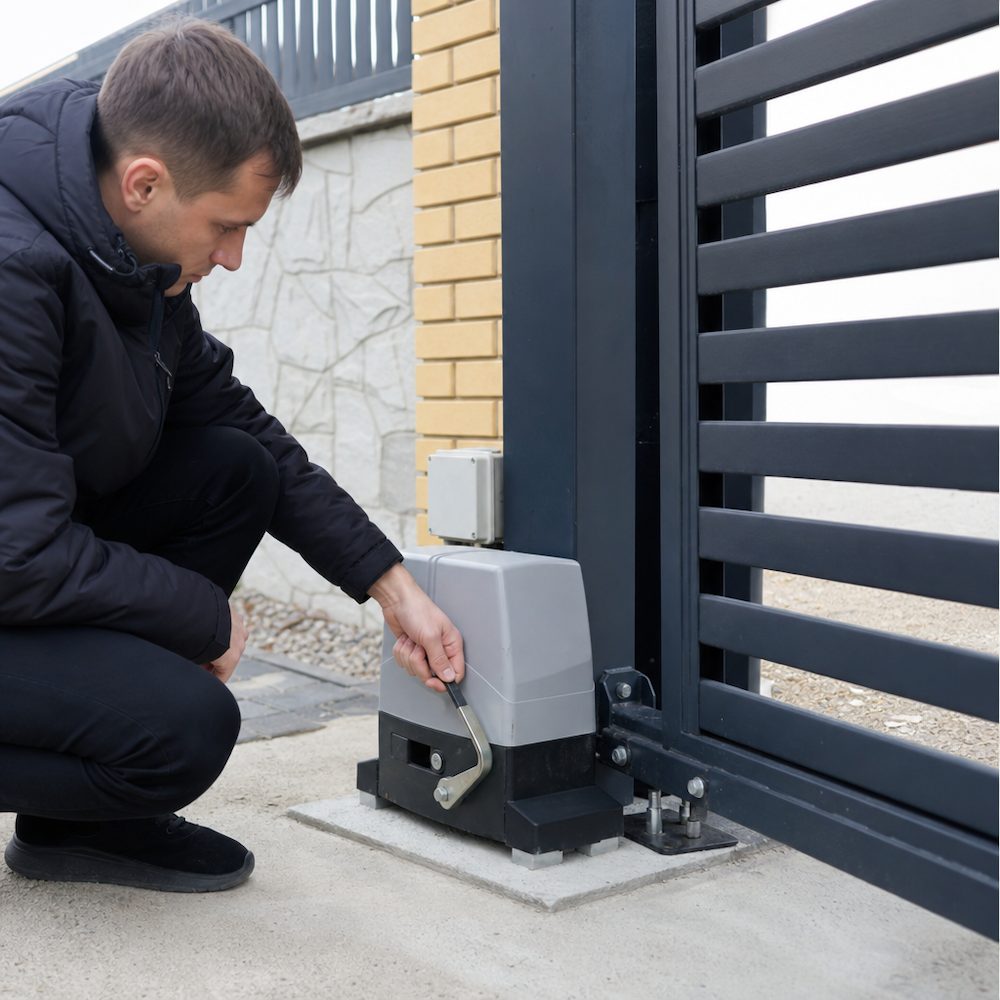
The manual release mechanism exists on virtually every modern gate operator. This physical lever or key release allows the motor to be disengaged so the gate can be moved by hand. It serves as a last-resort access method during power outages or equipment failures rather than a daily convenience feature.
In Southern Nevada’s climate, all of these devices face exposure to extreme heat, blowing dust, and occasional high winds. Their long-term performance depends significantly on proper component selection, installation quality, and protection from environmental wear.
What Property Owners Should Prioritize
Reliability stands as the central concern for any interior access method. A keypad or exit loop that works inconsistently creates frustration and defeats the purpose of having backup access options. In Las Vegas Valley conditions, this reliability depends on choosing components rated for high temperatures and housing them appropriately against dust infiltration.
Safety considerations extend beyond convenience. The manual release exists specifically to prevent people from being trapped inside during extended power outages or complete system failures. This is a code requirement, not an optional upgrade. Understanding where this release is located and how to operate it matters for every property owner.
Durability of interior components becomes critical under constant desert exposure. Keypads mounted in direct sun may experience shortened lifespans. Wiring exposed to temperature extremes can become brittle over time. Exit loop sensors buried in asphalt can shift or fail as the ground expands and contracts with temperature changes. These are not defects but realities of the local environment that affect maintenance expectations.
Long-term cost connects directly to how interior access methods are selected and positioned. More robust, properly located devices reduce frustration with lost remotes and minimize the need for repeated repairs. Spending appropriately upfront on quality components suited to the desert climate often costs less than dealing with frequent failures.
Usability matters for day-to-day function. Interior controls and exit devices should be placed where people naturally need them. A keypad positioned too far from the garage door creates inconvenience. An exit loop calibrated incorrectly may not detect certain vehicles. For commercial and multi-tenant properties, these details become even more significant because more people depend on consistent automatic exit function throughout each day.
Misunderstandings That Lead to Frustration
The belief that an electric gate is remote-only represents the most common misconception. In reality, most modern systems are specifically designed with multiple interior access paths to avoid that single point of failure. A properly configured automatic gate should have at least one alternative method for opening from inside.
Confusion between safety sensors and access controls causes frequent frustration. Photo eyes and obstruction sensors are primarily designed to prevent the gate from closing on a person, vehicle, or object. They stop unsafe movement rather than providing a convenient way to open the gate on command. When someone waves at a sensor expecting the gate to open and nothing happens, this misunderstanding is usually the cause.
The assumption that interior devices require no attention once installed leads to preventable problems. Keypads, exit loops, and sensors all experience wear over time. Desert conditions accelerate this process. Dust accumulation, sun damage to housings, and heat stress on electronics mean these components need periodic attention to maintain reliable function.
Some property owners expect any visible device or box near the gate to open it. In practice, many components serve different purposes entirely. Attempting to use the wrong device creates confusion and can lead to the mistaken belief that interior access options do not exist or are not working.
How This Plays Out in Everyday Use
In residential settings, homeowners typically rely on a combination of remotes and one or two interior devices. A wall-mounted push button near the garage door allows someone to open the gate without carrying a remote to their car. An interior keypad near a side entrance provides access for family members or guests.
Problems surface when these devices begin showing wear. A keypad that worked flawlessly for years may become intermittent during especially hot summer months. Dust accumulation inside a push button housing can cause delayed or missed responses. These issues often appear gradually, making it difficult to identify when reliability has truly degraded.
Commercial and multi-tenant properties face different dynamics. Parking lots and gated communities depend heavily on automatic exit loops to move traffic efficiently. When these systems become unreliable, the impact multiplies quickly. Drivers stack up waiting for a gate that opens inconsistently. Staff field complaints about access problems. Manual workarounds become necessary during busy periods.
Many property owners only discover the manual release or alternative interior controls during an actual failure. A power outage reveals that they never learned where the release lever is located. A dead remote battery exposes a keypad they forgot was installed. This gap between what people think their system can do and how it actually functions creates unnecessary stress during already frustrating situations.
In desert climates, users frequently notice more issues on especially hot, windy, or dusty days. Components that work fine in moderate conditions may struggle when temperatures exceed 110 degrees or when wind-driven dust coats sensors and keypads.
When Professional Guidance Helps
Questions about opening an electric gate from inside without a remote commonly arise during installation planning, troubleshooting of existing systems, or upgrades to aging equipment. Property owners and managers throughout the Las Vegas Valley want to understand what interior access options exist for their specific situation and how reliable those options will be under local conditions.
DNG Automatic Gates has served this region for more than 12 years, with owner Dave Williams bringing over 25 years of hands-on industry experience. That field knowledge translates directly into practical recommendations for interior access configurations that hold up under Southern Nevada’s demanding climate.
If you are evaluating an automatic gate installation, experiencing reliability issues with existing interior access methods, or simply want to understand what options your current system includes, a consultation can provide clarity. You can visit the DNG Gates Contact Page or call (702) 505-3107 to discuss your specific situation and receive a free estimate.


