
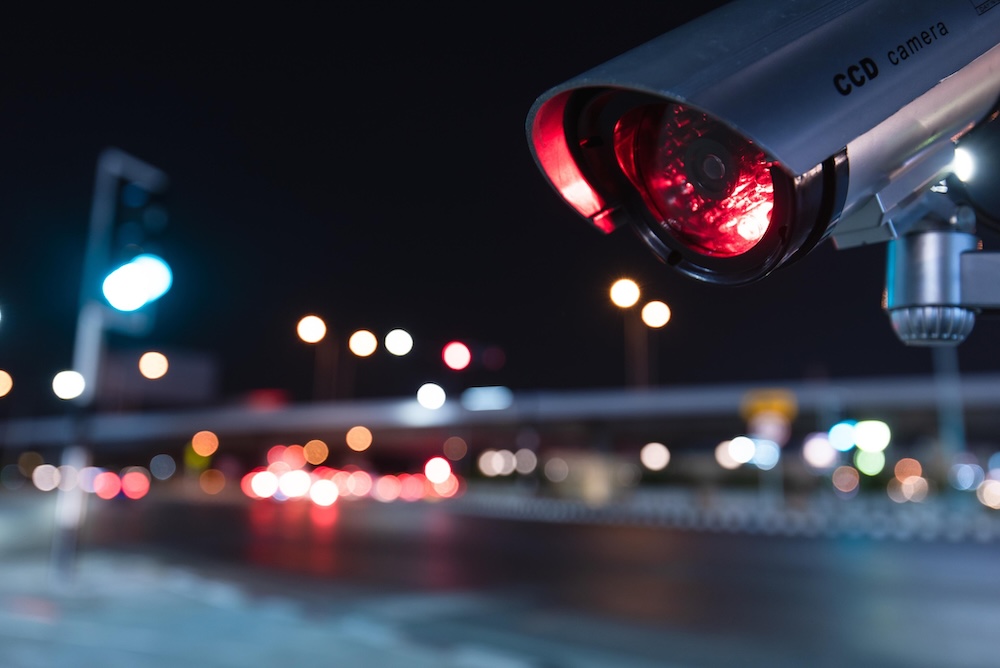
When evaluating night vision CCTV for gate entries, the most important factor is whether the camera system can consistently deliver clear, recognizable images of people and vehicles in actual nighttime conditions over the long term.
A “night vision” label on a camera does not guarantee usable footage at your specific gate, especially in a desert environment like Las Vegas where heat, dust, and wind affect equipment performance daily. Understanding what separates effective night vision setups from disappointing ones helps property owners make decisions that hold up to real-world use.
For a broader look at how CCTV systems integrate with gate entry, the relationship between camera placement, environmental exposure, and long-term reliability becomes even more relevant.
How Night Vision CCTV Actually Works at Gate Entries
Night vision CCTV at a gate entry functions by combining the camera’s built-in low-light capabilities with whatever ambient light exists around the entry point. This might include streetlights, landscape lighting, nearby building lights, or the camera’s own infrared illumination.
The result you see on screen depends heavily on how these light sources interact with the camera’s sensor and lens at that specific location.
Because gate cameras are typically mounted on posts, pillars, or adjacent walls, they sit close to where vehicles and people move through the entry. This positioning affects the field of view, the distance to subjects, and how much environmental interference the camera picks up.
Mounting height matters more than many property owners realize. A camera placed too high may capture the tops of heads rather than faces. One placed too low may get washed out by vehicle headlights approaching the gate.
Residential gate entries usually focus on a single driveway or walk gate, where the primary goal is seeing who is at the gate before opening it or reviewing who came through while the owner was away. The expectations center on recognizing a face or identifying a vehicle clearly enough to be useful.
Commercial properties often have different demands. Multiple lanes, higher traffic volumes, and broader coverage areas around the entrance change how night performance is measured and experienced.
In both cases, the camera’s real-world performance depends on factors that exist at the gate itself, not just the specifications printed on the packaging.
Why Environmental Conditions in Las Vegas Affect Long-Term Performance
Southern Nevada presents specific challenges for any equipment installed outdoors, and gate-mounted cameras face these conditions directly. Extreme heat, fine dust, wind-driven debris, and significant temperature swings between day and night all affect camera housings, lenses, and internal components over time.
A camera that delivers sharp night images during the first few months may show gradual degradation as dust accumulates on the lens or housing. This buildup can reduce image clarity, especially at night when the camera is already working harder to capture usable footage.
Gate movement itself introduces vibration that can shift camera alignment over time. Even small changes in angle can move the field of view away from the area that matters most, such as where a person’s face appears when they approach the intercom or where a license plate sits when a vehicle stops at the entr
Heat cycling causes materials to expand and contract daily, which can affect seals, connections, and mounting hardware. Cameras rated for outdoor use in moderate climates may not hold up the same way in a location where summer temperatures regularly exceed 110 degrees.
Wind in the Las Vegas Valley carries fine particulate matter that works into seams and accumulates on exposed surfaces. This is a continuous condition, not an occasional event, and it affects how cameras age in the field.
For property owners, this means the conversation about night vision CCTV at gate entries is not just about initial image quality. It is about whether that quality will remain consistent over months and years of exposure to desert conditions.
Common Misunderstandings About Night Vision Camera Performance
One of the most frequent misunderstandings is that all cameras labeled “night vision” will perform the same way regardless of where they are mounted or what the lighting looks like at the gate. In practice, two cameras with identical specifications can produce very different results depending on placement, angle, and environmental factors at the specific installation site.
Another common assumption is that a single camera can cover every angle and distance around a gate entry equally well. Gate entries involve movement in multiple directions: vehicles approaching, stopping, and passing through; people walking up to intercoms or keypads; and activity on both sides of the gate. One camera position rarely captures all of this with the same level of detail.
Some property owners expect night footage to match the clarity of daytime footage, which is not realistic for most systems. Night vision cameras are working with less light and relying on technology that has inherent limitations. The goal is usable footage that shows recognizable faces and identifiable vehicles, not daylight-equivalent image quality.
There is also a tendency to assume that once a camera is installed, it will continue performing the same way indefinitely without attention. Dust on the lens, minor shifts in alignment, and weathering of the housing all affect image quality over time. Systems that are not periodically checked and maintained tend to degrade in ways that only become apparent when the footage is needed for a specific incident.
Understanding these limitations upfront helps set realistic expectations for what night vision CCTV at a gate entry can and cannot deliver.
How This Shows Up in Daily Use at Residential and Commercial Gates
In everyday terms, night vision CCTV at gate entries gets tested whenever someone arrives after dark. This includes late deliveries, guests arriving in the evening, early morning service visits, and any overnight activity that triggers the need to review recorded footage.
Residential users often rely on live camera feeds to see who is at the gate before deciding whether to open it remotely. They also look back at recordings to check who came and went during hours when they were not home or not paying attention to the gate. The practical question is whether the footage shows enough detail to recognize a person or read a license plate when it matters.
Commercial properties see more traffic and more varied conditions. Vehicles entering shared parking areas, service trucks arriving at loading zones, and after-hours access by employees or contractors all generate footage that may need to be reviewed later. The expectations are often higher for clarity and coverage because the stakes involve business operations, liability, and security protocols.
Over time, property owners in both categories tend to notice when image quality has declined. Footage that was once sharp becomes hazier. Details that were visible in earlier recordings become harder to make out. This gradual change is often tied to environmental exposure that accumulates without obvious signs until the footage is needed.

Addressing these conditions during installation and planning for periodic maintenance makes a measurable difference in how well a night vision system holds up to real use at a gate entry.
What to Evaluate When Choosing Night Vision CCTV for Your Gate
When selecting night vision CCTV for a gate entry, the focus should be on how the system will perform in actual conditions at your property, not on generalized specifications alone. This means considering the specific lighting around your gate, the angles that matter most for identifying people and vehicles, and how the equipment will handle long-term exposure to desert heat and dust.
Mounting position affects both what the camera sees and how it weathers environmental conditions. Cameras tucked under an overhang or positioned away from direct sun exposure tend to hold up better than those mounted in fully exposed locations.
The relationship between ambient light and camera capability determines night image quality. If your gate area has consistent landscape lighting or nearby streetlights, the camera can rely partly on that illumination. If the entry is dark, the camera’s infrared range and sensor sensitivity become more critical.
Field of view should match how people and vehicles actually move through your gate. A wide-angle lens may cover more area but compress detail at distance. A narrower field may capture better facial recognition but miss peripheral activity.
Long-term reliability ties directly to how well the installation accounts for local conditions. Cameras that are properly housed, sealed, and positioned for the environment perform more consistently than those installed without attention to these factors.
For property owners in Las Vegas, Henderson, Pahrump, and the surrounding valley, night vision performance is often an important consideration when evaluating CCTV coverage at gate entrances. DNG Automatic Gates has served the region for more than 12 years, with owner Dave Williams bringing over 25 years of hands-on industry experience to CCTV integration, automatic gates, and access control systems. That field experience helps inform equipment recommendations and installation practices based on how surveillance systems perform under real-world Southern Nevada conditions rather than solely on manufacturer specifications.
Factors such as camera placement, lighting conditions, infrared performance, environmental exposure, and recording requirements can all affect how useful night vision footage will be over time. Property owners considering CCTV installation, upgrades, repairs, or broader access control evaluation may benefit from discussing how these considerations apply to their specific property and monitoring goals. Consultations and system evaluations are available for those seeking additional guidance, and a free estimate can be requested through the DNG Gates Contact Page or by calling (702) 505-3107.


