
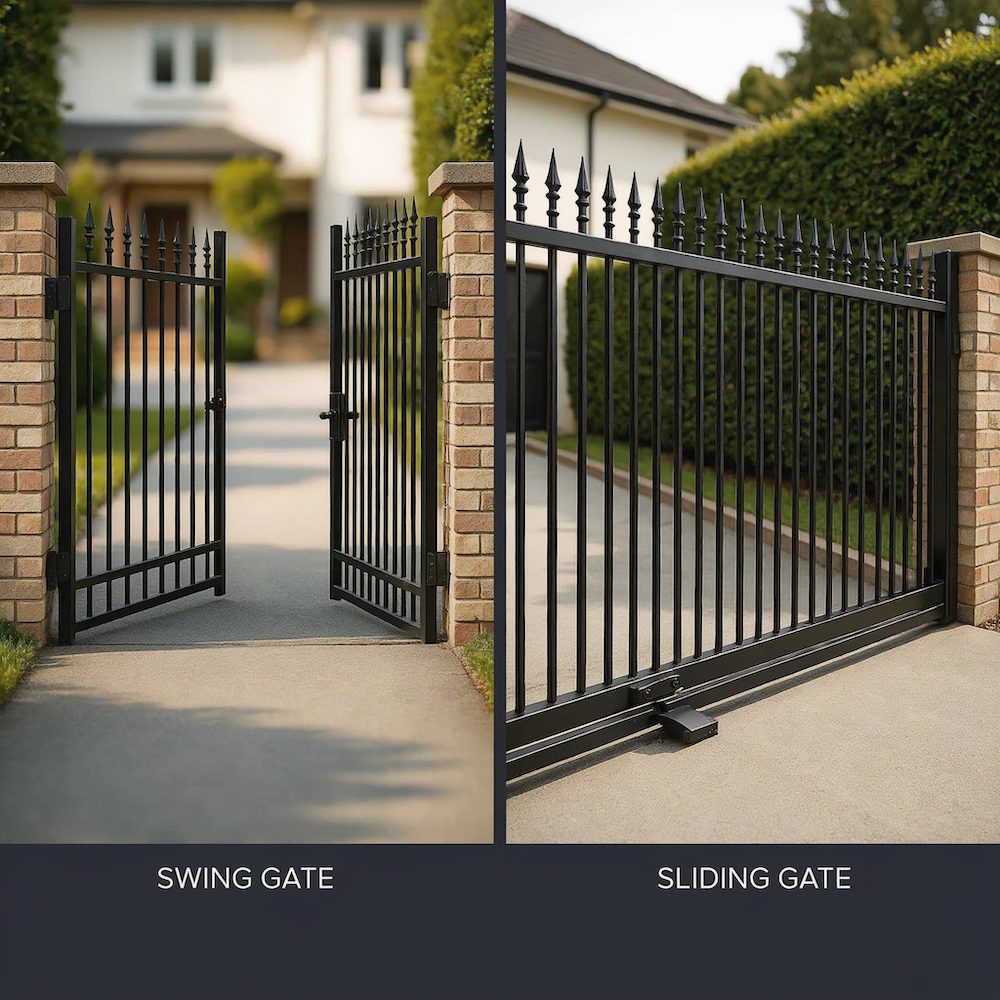
Choosing between a swing gate and a sliding gate comes down to how your property is laid out, how much space you have, and what kind of daily use the gate will see. Both systems work well when installed correctly, but each one behaves differently depending on driveway grade, available clearance, and traffic patterns.
Understanding how these two gate types operate in real conditions helps property owners make decisions that hold up over years of use rather than just looking good on day one. For a broader look at how automatic gate systems function across different applications, that context can help frame the specifics covered here.
How Swing Gates Operate and Where They Work Best
Swing gates open inward or outward on hinges, similar to a standard door. This design requires clear space on one side of the gate for the panels to travel through their full arc.
The amount of clearance needed depends on gate width. A single swing gate might need six to eight feet of unobstructed space. A dual swing setup requires that clearance on both sides of the driveway.
Flat or nearly flat driveways tend to work best with swing gates. If the driveway slopes upward immediately past the gate, an inward-swinging panel may scrape the ground or fail to open fully.
Outward-swinging gates avoid some slope issues but introduce other concerns. In Las Vegas, many properties sit close to sidewalks or streets. An outward swing can encroach on public right-of-way, which may violate local codes.
Swing gate operators mount to posts or columns and use mechanical arms to push or pull the gate panel. These operators work well for residential driveways with moderate daily use.
Wind load matters in the Las Vegas Valley. A large swing gate panel catches wind like a sail. High gusts can stress hinges, bend arms, or force the operator to work harder than it should. Proper bracing and correctly rated hardware reduce these risks but do not eliminate them entirely.
Swing gates often suit properties where appearance matters and space is available. Estate-style entrances, decorative iron panels, and traditional layouts tend to favor this design.
How Sliding Gates Operate and Where They Make Sense
Sliding gates move horizontally along a track or are supported by a cantilever system. Instead of swinging through an arc, the gate panel travels parallel to the fence line.
This design requires lateral space rather than depth. A ten-foot-wide opening typically needs at least ten feet of clearance to one side for the gate to slide fully open.
Track-based systems run on wheels that roll along a ground-mounted rail. These work reliably on flat, stable surfaces. In desert conditions, dust and debris can accumulate in tracks, so periodic cleaning helps maintain smooth operation.
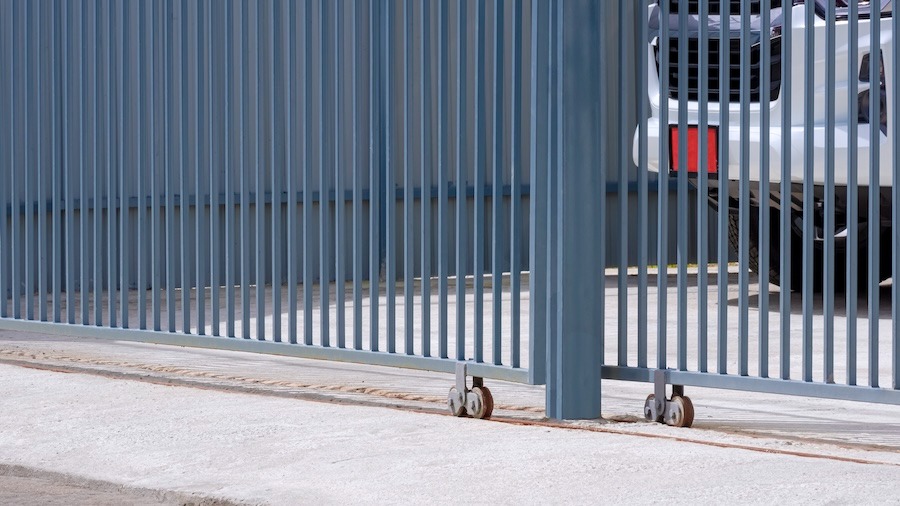
Cantilever systems suspend the gate above the ground using a counterbalance design. The gate never touches the track during operation. This setup handles uneven ground better and reduces debris issues, though it requires a longer gate panel to account for the counterweight section.
Sliding gates handle slopes more easily than swing gates. Because the panel moves horizontally, driveway grade does not interfere with the gate path.
Wind affects sliding gates differently. The panel stays close to the fence line, reducing the sail effect. Operators push or pull the gate along its path rather than fighting against gusts.
Commercial properties often favor sliding gates because of higher traffic volume and space efficiency. The system opens quickly, stays out of the way, and holds up under repeated daily cycles.
Residential properties with limited front yard depth or upward-sloping driveways often find sliding gates more practical than swing alternatives.
What Installation and Maintenance Look Like for Each Type
Swing gate installation involves setting posts or columns strong enough to support the gate weight and operator stress. Hinge placement matters for alignment. Operator mounting must account for arm travel and gate panel swing radius.
In Southern Nevada, concrete post footings need to cure properly despite temperature extremes. Rushing this step leads to shifting posts and alignment problems down the line.
Sliding gate installation requires a level track or properly engineered cantilever support. Track systems need a concrete foundation along the gate path. Cantilever systems require a substantial support post and counterbalance structure on the side where the gate rests when open.
Both systems use electric operators connected to control boards, safety sensors, and access devices. Proper wiring, weatherproof housings, and correct sensor placement are standard requirements regardless of gate type.
Maintenance for swing gates focuses on hinges, operator arms, and panel alignment. Hinges wear over time, especially under wind stress. Arms can bend or lose calibration. Lubrication and periodic adjustment keep the system operating smoothly.
Sliding gate maintenance centers on wheels, tracks, and rollers. Dust buildup in tracks causes drag. Worn wheels create noise and uneven movement. Cantilever systems need roller and bearing inspection to ensure the gate glides without resistance.
Both systems benefit from annual or semi-annual inspections. Checking safety sensors, testing manual release functions, and verifying operator settings help catch issues before they cause failures.
Safety Features and Access Control Considerations
Both swing and sliding gates must meet safety standards that protect people and vehicles during operation. Photo eyes, edge sensors, and entrapment protection are standard requirements.
Photo eyes detect objects in the gate path and stop or reverse movement. Mounting height and alignment matter for reliable detection. Sensors placed too high may miss low obstacles. Sensors knocked out of alignment create false triggers or blind spots.
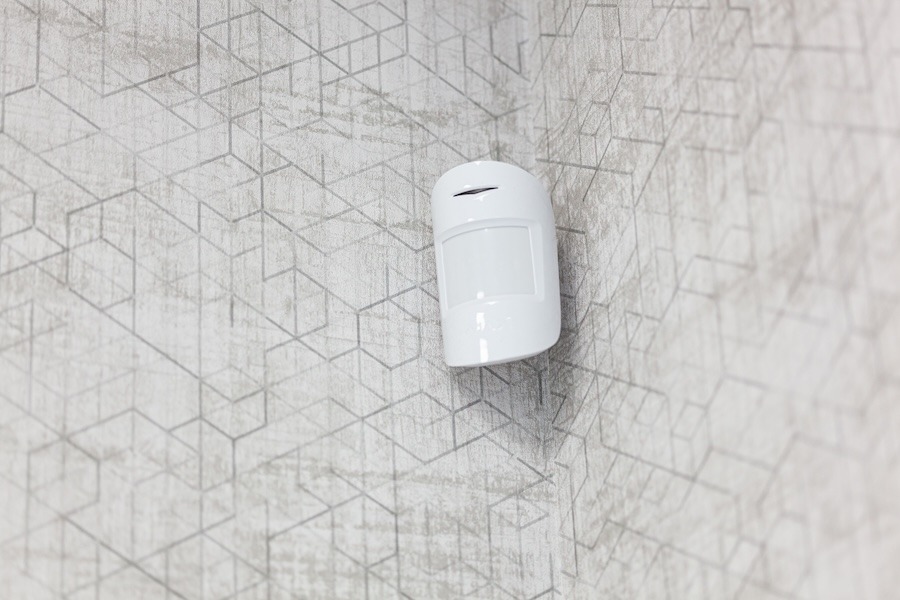
Edge sensors detect physical contact with the gate panel. If something presses against the gate during travel, the system stops. These sensors require proper calibration and periodic testing.
Swing gates present pinch point hazards where the panel meets the post or column. Proper sensor placement and safety covers reduce risk.
Sliding gates create shear hazards along the leading edge and where the gate meets the support structure. Safety sensors and protective housings address these areas.
Access control systems work with both gate types. Keypads, card readers, remote transmitters, and smartphone-based systems integrate with gate operators through relay connections or direct wiring.
Commercial properties often require more complex access configurations, including multiple user codes, entry logs, and integration with building security systems. Both swing and sliding gates accommodate these setups when the operator and control board support the required functions.
Proper installation ensures safety devices function correctly from day one. Ongoing testing confirms they continue to work as the system ages.
Making the Right Choice Based on Your Property
The decision between swing and sliding gates depends on measurable factors rather than preference alone. Space availability, driveway slope, traffic volume, and wind exposure all influence which system performs better over time.
Properties with deep, flat driveways and lower traffic often work well with swing gates. The design suits traditional aesthetics and straightforward installations where space is not a constraint.
Properties with limited depth, upward slopes, or higher daily use tend to favor sliding gates. The horizontal travel path avoids grade conflicts and handles repeated cycling without the mechanical stress that swing systems experience.
Las Vegas heat, dust, and wind affect both systems. Choosing quality components, proper installation, and regular maintenance addresses these conditions regardless of gate type.
Cost differences between swing and sliding gates depend on gate size, material, operator selection, and site conditions. Neither system is universally cheaper. A complex swing installation on a sloped site may cost more than a straightforward sliding setup, or vice versa.
The right gate is the one that matches your property layout, handles your expected use, and holds up under local conditions.
Considering a Gate Installation or Upgrade
If you are evaluating automatic gate options for a residential or commercial property in Las Vegas, Henderson, Pahrump, or the surrounding Las Vegas Valley, a site evaluation helps clarify which system fits your specific situation.
DNG Automatic Gates has served the region for more than 12 years, and owner Dave Williams brings over 25 years of hands-on industry experience to every project. That background helps identify practical solutions based on how gates actually perform in desert conditions.
A free estimate is available for property owners ready to explore their options. Visit the DNG Gates Contact Page or call (702) 505-3107 to discuss your property and learn which gate type makes sense for your setup.


