Telephone Entry Systems for Small Apartment Buildings: What to Consider
Telephone Entry Systems for Small Apartment Buildings: What to Consider
Managing entry access in a small apartment building presents a specific set of challenges. Unlike large complexes with full-time staff, small buildings typically rely on automated access to handle the constant flow of residents, delivery drivers, maintenance workers, and guests. A telephone entry system addresses that need by allowing visitors to call a resident directly from the gate or building entrance and receive remote access without anyone having to physically answer the door downstairs.
Choosing the right system for a small building involves more than picking a panel off a shelf. Several practical factors affect how well a system will serve the property and its residents over time.
How a Telephone Entry System Handles Visitor Access
A telephone entry system connects visitors at the gate or entrance to residents through a call. When a visitor arrives, they look up a name in the system's directory, press the corresponding button, and the system places a call to that resident's phone — whether landline or mobile. The resident can speak with the visitor, verify their identity, and then press a key on their phone to release the gate or door.
This process requires no physical key distribution and eliminates the need for an attendant. Residents can grant access from anywhere with phone service, which is particularly useful for accepting package deliveries or letting in repair technicians during work hours.
Number of Units and Directory Capacity
For small apartment buildings, directory capacity is rarely a concern in terms of raw numbers, but it still shapes which systems are appropriate. A building with twelve units has very different programming demands than one with eighty.
Some entry systems are designed for low-unit-count properties and offer simplified programming and compact enclosures. Others are built to scale, with larger directories and more configuration options that go largely unused in a smaller building. Matching system capacity to actual needs avoids paying for complexity the building doesn't require.
Beyond unit count, it's worth considering how many residents in a given unit might want separate directory listings. In student or shared housing situations, multiple people in one apartment may each need their own entry in the directory.
Wired, Cellular, and IP Connectivity Options
The connectivity method determines how calls are placed from the entry panel to residents, and it's one of the most consequential choices for a small building.
Traditional wired telephone entry systems connect through a standard telephone landline. They are reliable and simple, but they depend on maintaining a physical phone line — an ongoing operating cost that some properties prefer to eliminate.
Cellular-based systems replace the landline with a built-in cellular module, placing calls over a mobile network. These systems eliminate the need for a phone line at the entry point and can be installed in locations where running telephone wiring would be impractical. They do require cellular coverage at the installation location and typically involve a recurring service plan.
IP-based systems communicate over the building's internet connection or local network. These systems often support video calling, remote management through a web portal or app, and integration with building management software. For a small building already running a reliable internet connection, an IP system can offer more features at a manageable cost.
The right choice depends on what infrastructure the building already has in place and what ongoing costs the property can sustain.
Video vs. Audio-Only Entry Panels
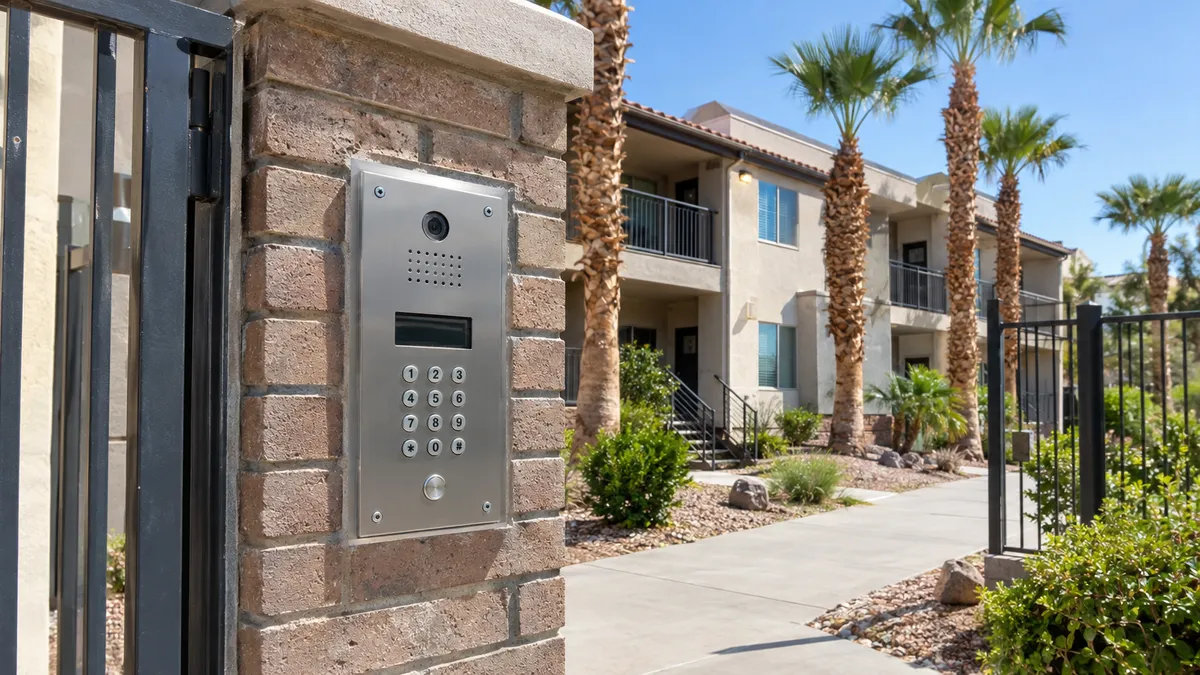
Standard telephone entry panels connect via audio — the resident and visitor can speak with each other but neither can see the other. Video entry panels add a camera and, in systems with compatible displays or smartphone apps, allow the resident to view the visitor before deciding whether to grant access.
For small apartment buildings where security is a priority, video capability adds a meaningful layer of verification. For properties where budget is a constraint and the resident population is familiar with regular visitors, audio-only systems often meet the requirement adequately.
Video systems typically cost more to purchase and may require more robust network infrastructure to function reliably. The decision should reflect the actual security needs of the property and what residents are expected to encounter at the entrance.
Gate and Door Operator Compatibility
A telephone entry system needs to work with whatever gate or door hardware controls access. Most systems communicate with gate operators and electric door strikes through relay outputs — when the resident presses the release key, the relay closes and triggers the opener.
Before selecting a system, it's important to confirm that the entry panel's relay output is compatible with the existing gate operator or door controller. Voltage requirements, relay type, and wiring distance all affect whether a particular panel will work with the existing hardware without modification.
In some installations, the entry system communicates with a swing gate operator or slide gate, while in others it controls a pedestrian door or an intercom-integrated barrier. Each setup has specific wiring and configuration requirements that should be evaluated before equipment is purchased.
Directory Management and Remote Administration
Managing a telephone entry directory is an ongoing task, not a one-time setup. Residents move in and out, phone numbers change, and the directory needs to stay current to remain functional.
Older telephone entry systems require on-site programming through a keypad, which can be time-consuming and requires physical access to the panel. Newer systems — particularly IP-based and cellular models — typically allow directory management through a web portal or mobile app, so changes can be made from any location without dispatching anyone to the property.
For a small apartment building manager or HOA board overseeing multiple properties, remote administration capability can significantly reduce the time spent maintaining access systems. This is especially true in buildings with higher resident turnover.
Installation and Environmental Considerations
Where the entry panel is mounted and how it is wired matters as much as which system is chosen. The panel needs to be positioned at a height and angle accessible to drivers in vehicles as well as pedestrians, properly lit for nighttime use, and protected from direct weather exposure where the layout allows.
In Southern Nevada's climate, heat is a practical concern. Panels mounted in direct sun can experience accelerated wear on display screens, internal components, and wiring insulation. Specifying equipment with appropriate operating temperature ratings and siting the installation to minimize prolonged sun exposure supports longer service life.
Wiring runs from the panel to the gate operator, power supply, and network connection should be protected against UV degradation and physical damage, particularly in outdoor or semi-exposed installations.
Matching the System to the Building's Long-Term Needs
A telephone entry system installed today should still be serving the building five to ten years from now. Choosing a system from a manufacturer with an established service network means replacement parts, firmware updates, and technical support remain available over time.
For small apartment buildings, the most common mistakes are over-specifying — purchasing a system built for hundreds of units when the building has twenty — and under-specifying, selecting the lowest-cost panel without accounting for future needs such as video or remote management. A system that fits the building's actual size, infrastructure, and management capacity tends to perform reliably with minimal intervention.
More detailed guidance on telephone entry systems — including how different technologies compare and what the installation process involves — can help clarify which approach fits a given property.
Getting the Selection Right
The best telephone entry system for a small apartment building is one that matches how the building is actually managed, what infrastructure already exists on the property, and what residents need from the access process.
Connectivity type, video capability, directory management tools, and gate operator compatibility all shape whether a system works smoothly in practice or creates ongoing friction. Clarifying those requirements before purchasing equipment avoids costly modifications after installation.
DNG Automatic Gates works with telephone entry systems, gate operators, and access control equipment across the Las Vegas Valley, bringing practical experience with the specific installation conditions and equipment demands of this region.