
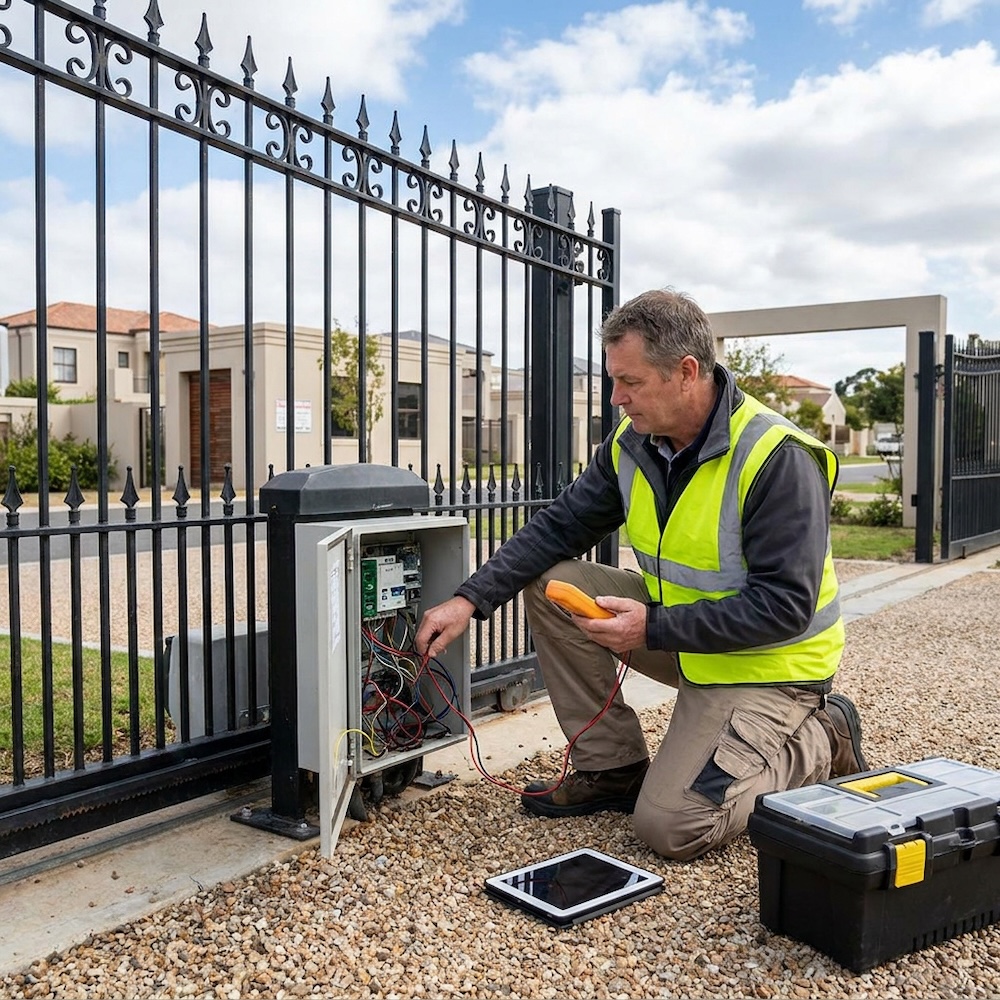
The most common electric gate problems come down to how moving parts, motors, controls, and safety devices respond to everyday use and environmental stress. In the Las Vegas Valley, desert heat, dust, and wind accelerate wear on mechanical components and strain electronic systems in ways that affect how consistently your gate opens, closes, and protects your property. Understanding these patterns helps set realistic expectations about what goes wrong and why. For a broader look at how these systems work, visit our automatic gates overview.
Why Electric Gates Stop Working the Way They Should
Few things are more frustrating than pressing a remote or entering a code and watching your gate hesitate, stop halfway, or refuse to close entirely. This tends to happen at the worst moments—when you’re trying to leave for work, when a delivery driver is waiting, or when the gate sits open at night and you’re not sure why.
The uncertainty can be just as difficult as the inconvenience itself. Many property owners find themselves wondering whether the issue is something simple or a sign of a deeper mechanical or safety problem. When the same trouble keeps coming back, confidence in the system erodes.
For homeowners managing a single driveway gate and property managers overseeing busy multi-tenant access points, recurring problems raise the same basic concern. Is the gate going to work when it matters? Is it safe? And how much attention will it need going forward?
These questions make more sense once you understand what an automatic gate system actually is and how its different pieces interact under real-world conditions.
How Automatic Gate Systems Actually Work
An automatic gate is not a single device. It is a system made up of several connected parts, and problems can start in any of them.
The physical gate itself—whether a swing or slide design—moves on hinges, rollers, or a track. The operator is the motorized unit that pushes or pulls the gate open and closed. A control board processes signals from remotes, keypads, intercoms, or other access devices. Safety components like photo-eyes, loop detectors, and edge sensors monitor the gate’s path and tell the system to stop or reverse if something is in the way.

In practice, what customers experience as “the gate not working” is usually the combined result of how these pieces interact. A gate that has become harder to move because of worn rollers, track debris, or hinge wear forces the operator to work harder. Over time, that extra load can cause the motor to overheat, trip its protection, or shut down mid-cycle.
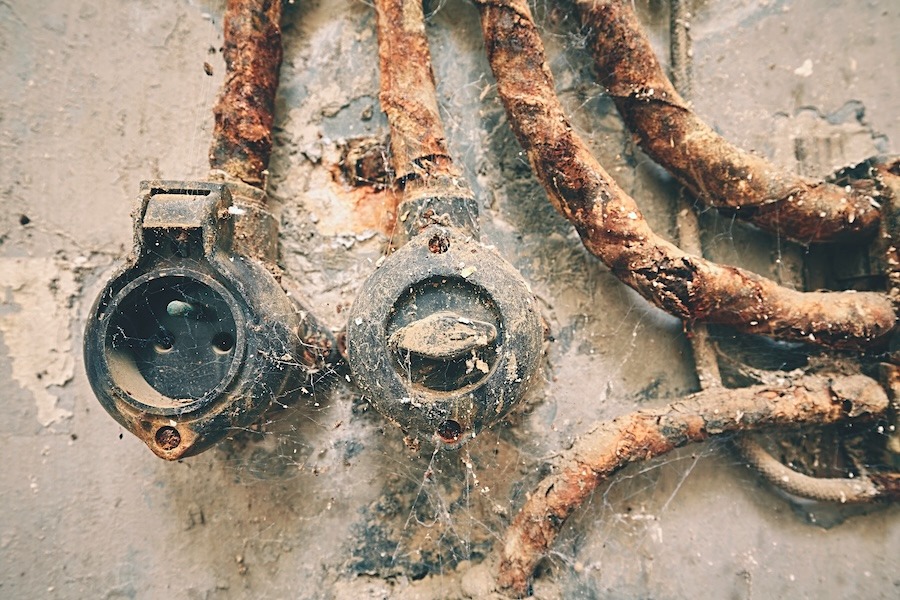
Control boards and wiring are also exposed to stress. Power surges, fluctuating voltage, and the heat inside operator housings can affect relays, limit switches, and circuit boards. In a desert climate, plastic housings, seals, and exposed connections face constant UV and temperature cycling that gradually degrades materials.
Safety devices add another layer. When photo-eyes get dirty, misaligned, or damaged, the gate may refuse to close or reverse unexpectedly. This is actually the system doing what it is supposed to do—responding to a signal that something might be in the way—but it often gets interpreted as a random malfunction.
Residential and commercial gates face similar issues, but higher traffic on commercial sites amplifies wear on every component. Gates that cycle dozens of times a day expose weaknesses faster than gates that open a handful of times for household vehicles.
What Matters Most When Electric Gates Have Problems
When electric gate issues come up, what property owners actually care about falls into a few clear categories.
Reliability comes first. Does the gate respond to remotes, keypads, and sensors without hesitation? Does it complete its travel smoothly and consistently? Unpredictable operation—gates that sometimes work and sometimes don’t—creates daily frustration and undermines the purpose of having controlled access in the first place.
Safety is closely tied to reliability. Photo-eyes, loops, and obstacle detection are designed to prevent the gate from closing on vehicles or people. When these devices are dirty, knocked out of alignment, or damaged, the gate may hold open, reverse unexpectedly, or behave in ways that feel erratic. In reality, the system is responding to the signals it receives, but those signals may not reflect actual conditions.
Durability matters over the long term. Desert heat, direct sun, dust, and wind put steady stress on motors, gearboxes, rollers, hinges, and electronic components. Lubricants dry out. Bearings wear. Tracks collect grit. These effects accumulate over years, not weeks, but they eventually show up as harder gate travel, noisier operation, and increased strain on the operator.
Long-term cost is often misunderstood. The real cost of an automatic gate includes future upkeep, not just the initial installation. Motors, gearboxes, rollers, hinges, and control boards all have service lives that depend on usage level, environmental exposure, and how well the system was matched to the gate in the first place.
Usability affects everyday experience. When remotes, keypads, or intercoms become unreliable due to worn buttons, damaged wiring, or heat-stressed components, residents, tenants, and visitors all feel the inconvenience. Access devices are often the most frequently touched parts of the system and tend to show wear accordingly.
Appearance and perceived security also matter. A gate that moves roughly, makes noise, or stands stuck open diminishes the sense of care and protection at a home, business, or community entrance.
Common Misunderstandings About Electric Gate Problems
Many property owners approach automatic gates as “set and forget” systems that should run indefinitely without attention. In reality, outdoor mechanical and electronic parts naturally need periodic checking, especially in harsh climates. Moving components wear. Electronics age. Environmental exposure takes a toll that accumulates over years of service.
Another common assumption is that every issue is just a remote battery or a simple electrical glitch. While access devices do cause some everyday frustrations, underlying mechanical resistance or misalignment often drives recurring problems. When a gate is harder to move because of friction in the track or worn hinges, the operator strains more with every cycle. That strain shows up as slow movement, overheating, or intermittent shutdowns.
Not all operators are designed for the same gate weight or usage level. A light-duty residential operator placed on a heavy or frequently used gate will work harder than it was built to, leading to overheating and early failure. This can look like “the motor keeps breaking,” when the real issue is that the system was never matched to the actual demands.
Many people also interpret safety-related behavior as random malfunction. When a gate refuses to close because a sensor is blocked or misaligned, that response is by design. The system is doing what it is supposed to do. Understanding this distinction helps separate true mechanical failures from protective behavior that needs a different kind of attention.
How These Problems Show Up in Daily Use
In residential settings, automatic gate problems tend to surface gradually. A driveway gate that has worked smoothly for years may start slowing down, making more noise, or occasionally stopping partway through its travel. These changes often trace back to rollers or hinges wearing, tracks collecting dust and debris, or lubricants drying out in the heat.
During extreme conditions—very hot days or high winds—marginal issues become more noticeable. Operators work harder when the gate is heavier to move. Sensors become more sensitive to dust or movement. What seemed like a minor nuisance in mild weather can become a daily frustration when temperatures climb.
On commercial and multi-tenant properties, higher traffic exposes weaknesses faster. Property managers often see patterns: gates that act up during busy times, access points where keypads or remotes seem unreliable for certain users, or safety devices holding gates open after being bumped by vehicles or dirtied by landscaping activity.
In both environments, people mainly experience the system through day-to-day convenience—or lack of it. The technical details behind each component matter less than whether the gate opens when it should, closes reliably, and feels predictable and secure.
Over 12 years serving the Las Vegas Valley, DNG Automatic Gates has seen these patterns repeat across thousands of service calls. Dave Williams, with more than 25 years of hands-on industry experience, often traces recurring problems back to the same underlying causes: mechanical resistance, mismatched components, environmental wear, and safety devices responding to conditions that have changed since installation.
Making Sense of Electric Gate Problems
Electric gate problems are rarely isolated to a single part. They are more often the combined result of how the gate moves, how well the operator is matched to its demands, how safety devices interpret their inputs, and how environmental stress accumulates over time.
Viewing your gate as a working system—one that naturally changes with years of heat, dust, and use—helps set realistic expectations. Components that move and components that are exposed to the elements will eventually need adjustment, cleaning, or replacement. This is not a sign of poor quality. It is the normal reality of any outdoor mechanical system.
Understanding how these pieces interact, especially in a desert climate, makes it easier to recognize what kind of attention a problem actually needs and when professional evaluation makes sense.
If you are dealing with recurring gate issues, noticing changes in how your system operates, or considering whether your automatic gate’s structure, operator, or safety devices are still matched to your property’s needs, a professional evaluation can provide clarity. DNG Automatic Gates offers free estimates for property owners throughout the Las Vegas Valley. Visit the DNG Gates Contact Page or call (702) 505-3107 to discuss your specific situation.


