

A pedestrian gate is a dedicated entry point designed for people on foot, separate from your main vehicle gate. It allows everyday walk-through access without cycling your automatic driveway gate each time someone needs to enter or leave. In the Las Vegas Valley, where extreme heat, wind, and dust affect everything outdoors, the way a pedestrian gate is built and used determines how well it holds up over years of daily operation.
For property owners considering how to manage foot traffic alongside an automatic gate system, understanding what a pedestrian gate actually does helps set realistic expectations for convenience, safety, and long-term reliability.
Why Pedestrian Access Becomes a Problem Without a Dedicated Gate
Many property owners reach a point where they notice the same frustration showing up repeatedly. The automatic driveway gate opens and closes constantly just for people walking in and out. Family members use it to take out the trash. Guests trigger it to visit for a few minutes. Service providers cycle it multiple times during a single appointment.
This pattern creates more than inconvenience. Every cycle adds wear to the motor, hinges, and mechanical components of the main gate. Over months and years, that accumulated use shortens service life and increases the likelihood of adjustments or repairs.
There is also a safety dimension that many owners overlook at first. When people routinely walk through a vehicle opening, they pass close to moving gate panels, sliding tracks, or swing arms. The risk of someone being in the wrong place at the wrong moment increases with every cycle.
Some properties have a side gate or fence opening that looks like it should handle foot traffic, but it never seems to work right. The latch does not catch. The gate sags and drags on the ground. Wind catches it and slams it against the post.
The confusion between a decorative garden gate, a simple fence opening, and a true pedestrian gate designed for secure daily use is common. Many owners are uncertain whether their current setup is good enough or whether a dedicated pedestrian gate would actually solve the problem.
What Makes a Gate a Pedestrian Gate
A pedestrian gate is sized and built specifically for people walking through, not for vehicles. It typically appears as a hinged gate or a smaller door integrated into the fence line near the main automatic gate.
The defining characteristic is purpose. A pedestrian gate exists to separate foot traffic from vehicle access so people can enter and exit without interacting with the driveway gate at all.
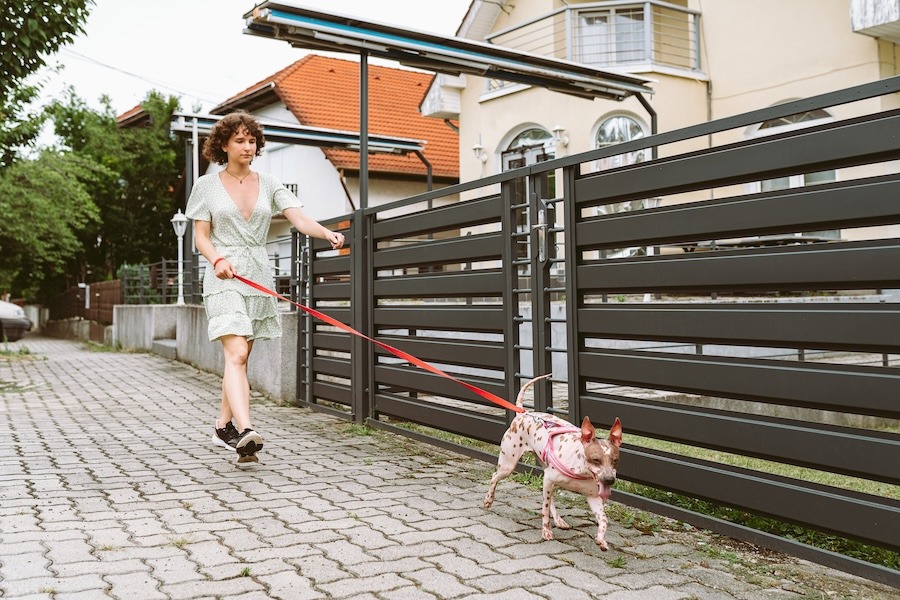
In residential settings, a pedestrian gate usually serves as the everyday entry for homeowners, kids, guests, and service providers. It handles the routine trips that happen far more often than driving in and out, like walking the dog, checking the mail, or letting a neighbor through.
Commercial and multi-tenant properties see different traffic patterns. Employees use pedestrian gates to clock in and out. Customers approach through walk-up entries separate from vehicle lanes. Delivery drivers access the property without waiting for a vehicle gate cycle.
The higher the foot traffic, the more a pedestrian gate functions as a working component of the access system rather than just an opening in the fence. Hardware choices, hinge quality, latch reliability, and post anchoring all affect how well the gate performs under repeated daily use.
In Las Vegas conditions, the demands on a pedestrian gate are more pronounced. Desert heat causes metal to expand during the day and contract at night. Dust accumulates in latches and hinges. Wind gusts can catch a gate mid-swing and stress the hardware in ways that milder climates rarely produce.
What Matters Most When Evaluating a Pedestrian Gate
Reliability is the first concern for most property owners. A pedestrian gate that does not latch consistently or drags on the ground creates daily frustration. Because the gate sees far more use than the driveway gate, it becomes the first place where wear shows up.
Hinge quality determines whether the gate stays aligned over time. Latches must catch reliably even after thousands of cycles. Posts need to be anchored solidly enough to resist movement from repeated opening and closing or from soil shifts over seasons.
Safety is closely tied to how the pedestrian gate interacts with the rest of the system. A properly placed gate keeps people away from moving automatic gate equipment. It also helps contain children and pets, reducing the chance that someone slips out through an unsecured or poorly latched opening.
Durability in Las Vegas conditions requires attention to materials and hardware. Metal components heat up significantly under direct sun and can fatigue over years of daily temperature swings. UV exposure affects finishes and, in some designs, non-metal parts. Wind gusts can slam a gate or hold it open, placing extra stress on hinges and latches.
Long-term cost is driven less by the gate leaf itself and more by how well the installation handles daily use, desert climate, and any integration with access control. A gate with stronger components and proper installation typically requires fewer adjustments and repairs over its service life.
Usability matters for day-to-day satisfaction. The gate should open and close easily without sticking or binding. Placement should make sense for how people actually move on and off the property, whether that means accessing the driveway, side yard, or a shared path.
Common Misunderstandings About Pedestrian Gates
One of the most frequent assumptions is that the main automatic gate can handle all traffic and a separate pedestrian gate is unnecessary. This overlooks the reality that constant cycling for foot traffic increases mechanical wear and shortens service life. It also ignores the safety exposure that comes from people walking near moving panels or tracks.
Another common belief is that any small gate in the fence works fine for walk-through access. Many owners underestimate how often the gate will be used each day and how that frequency affects hinges, latches, and alignment. A light-duty garden gate is not built for the same demands as a pedestrian gate meant for regular, secure use.
The idea that a pedestrian gate is maintenance-free once installed does not hold up in practice. Frequent movement loosens hinges and fasteners over time. Environmental stress from sun, wind, and dust affects smooth operation. Periodic checks and basic upkeep are usually needed to keep the gate closing and latching reliably.
Some owners assume that if the fence is strong, the gate automatically shares that strength. In reality, the gate can be the weak link if it has a light-duty latch, poor alignment, or hardware that can be forced or pried open under stress.
There is also a tendency to think of pedestrian gates mainly in terms of appearance or simple convenience. This overlooks their role in security, their impact on how the automatic system is used, and their contribution to safety and liability, especially where children, pets, or visitors are involved.
How Pedestrian Gates Perform in Real-World Conditions
In residential use, the pedestrian gate becomes the primary entry point for everyday movement. Family members, guests, and service providers use it far more often than the driveway gate. Over time, common issues emerge. The gate may sag, causing the latch to miss or the bottom edge to drag. Hinges loosen from frequent use or wind load. Latches stop catching reliably, which affects both security and containment.
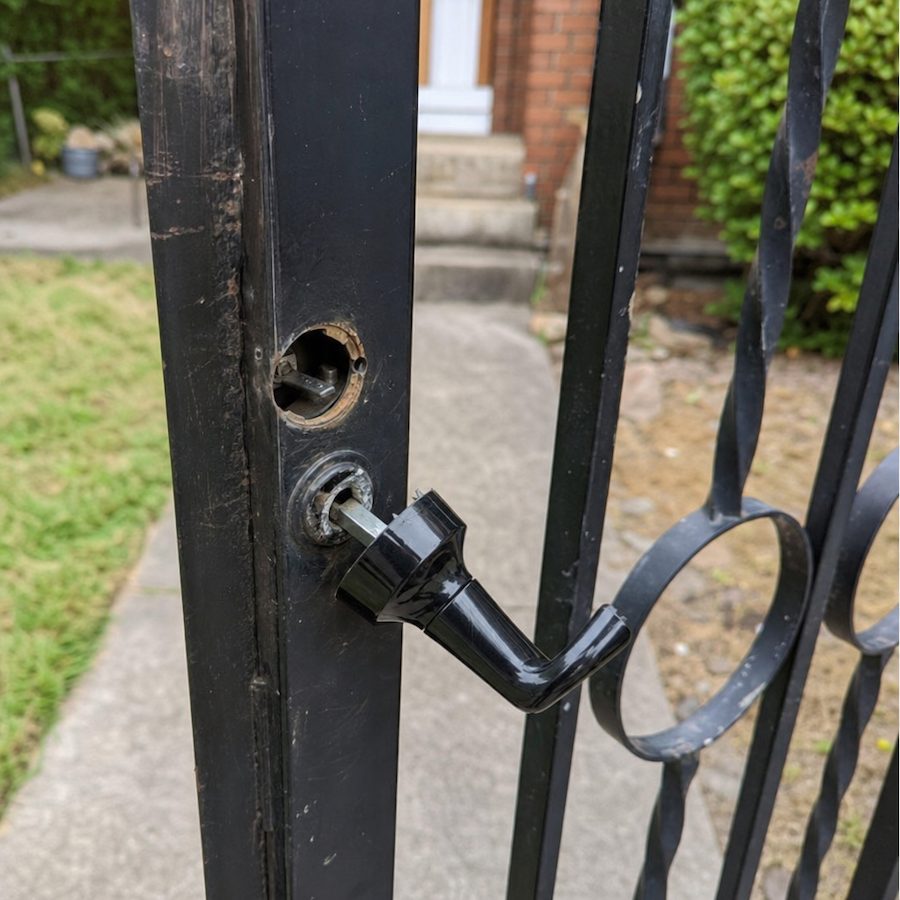
In Las Vegas summers, metal gates heat up enough to be uncomfortable to touch. Expansion and contraction from daily temperature swings can gradually shift alignment. Dust storms deposit grit into latches and hinges, affecting smooth operation until the debris is cleared.
Commercial and multi-tenant properties experience these patterns at an accelerated pace. Heavy daily foot traffic exposes weak hardware, misalignment, and access control issues quickly. When many different people use the gate, the chance of misuse increases. Gates get slammed, propped open, or handled roughly. Hardware must tolerate this kind of treatment along with high cycle counts.
Placement also affects how people behave around the property. A poorly located or hard-to-find pedestrian gate often gets ignored. People continue cutting through the vehicle opening instead, which defeats the purpose of separating foot and vehicle traffic and increases wear and risk on the main gate.
Strong winds can catch a pedestrian gate and swing it unexpectedly, stressing hinges and latches or causing the gate to slam against the post or frame. Even small alignment or hardware weaknesses that go unnoticed in calm weather can surface during monsoon season or high-wind events.
When a Pedestrian Gate Becomes Part of the Conversation
Questions about whether to add or upgrade a pedestrian gate typically come up when someone is installing, maintaining, or adjusting an automatic gate or perimeter access system. The way people move on foot directly affects how often the main gate cycles and how the entire setup performs day to day.
Understanding where foot traffic actually occurs on a property and how that lines up with current gate placement helps clarify whether a dedicated pedestrian gate would improve daily function, reduce wear on the main system, or address safety concerns that have gone unresolved.
The right pedestrian gate setup depends on traffic levels, property type, and how the automatic system is used. There is no single answer that fits every situation. What matters most is realistic expectations based on how the gate will actually be used and how long it needs to last under local conditions.
DNG Automatic Gates has served the Las Vegas Valley for more than 12 years. Owner Dave Williams brings over 25 years of hands-on industry experience to every project.
If you are considering a pedestrian gate as part of a new installation or an upgrade to your existing system, you are welcome to request a free estimate or reach out to discuss your specific situation. Visit the DNG Gates Contact Page or call (702) 505-3107.


