
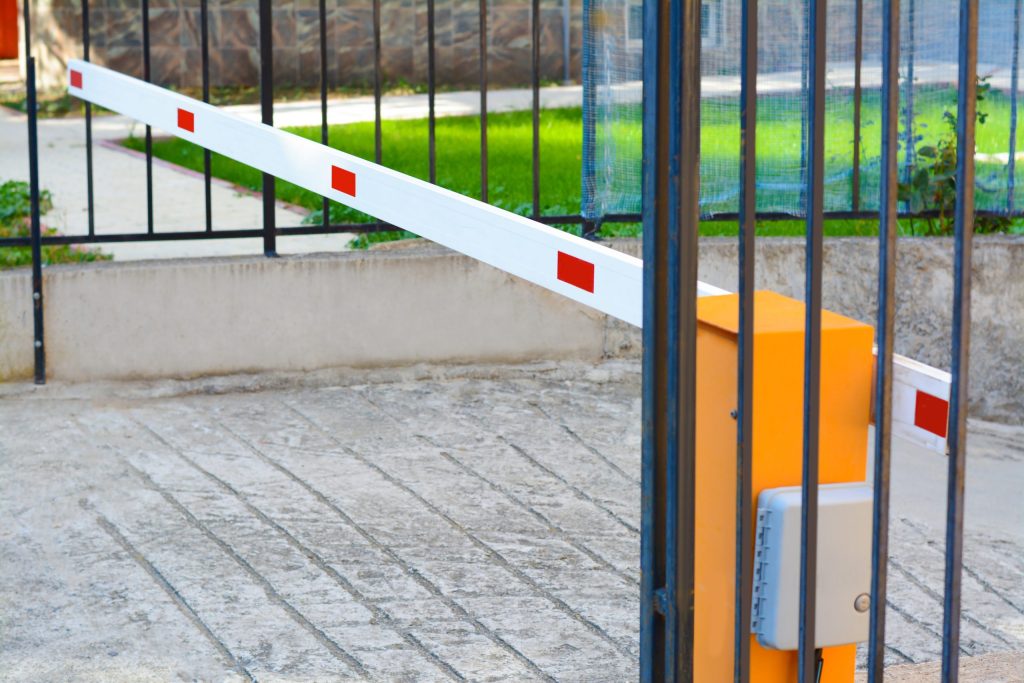
A boom gate opens when its controller receives a valid signal from one of its connected devices, whether that signal comes from an in-ground vehicle loop, a handheld remote, a keypad entry, or a safety sensor detecting movement in the lane. What feels like a simple, automatic response is actually several components working together behind the scenes.
For property owners across Las Vegas and the surrounding valley, understanding how these triggers function helps explain why a gate behaves predictably most days and inconsistently on others. The same principles apply whether the system controls a single residential driveway or a busy commercial parking area, and they connect directly to how pedestrian gates are configured alongside vehicle access points on the same property.
How Vehicle Detection Loops Actually Work
The most common trigger for a boom gate in everyday use is an inductive loop, which is a coil of wire buried in or under the pavement near the gate. When a vehicle drives over this loop, the metal in the car disturbs the electromagnetic field the loop generates. That disturbance sends a signal to the gate controller, which interprets it as permission to raise or hold the arm.
This detection method is reliable when installed correctly because the loop itself has no moving parts and sits protected beneath the surface. It does not wear out from vehicles driving over it the way a mechanical switch might.
The controller does not respond to the mere presence of a car. It responds only when the loop registers enough change in its field to confirm a vehicle is positioned above it. If the loop is damaged, improperly calibrated, or if a vehicle is too small to create sufficient disturbance, no signal is sent.
Motorcycles, bicycles, and very lightweight vehicles sometimes fail to trigger loops reliably. This is not a defect but a limitation of the technology itself. Loops are tuned for standard vehicles, and their sensitivity settings determine how much metal mass is required to generate a response.

In Las Vegas, where pavement can shift from heat expansion and settle over time, loop performance can change subtly across years. A loop that worked perfectly at installation may eventually need adjustment or replacement if the surrounding concrete or asphalt degrades around the wire.
Remotes, Keypads, and Credential-Based Access
While loops handle automatic vehicle detection, remotes and keypads give users direct control over when the gate opens. A handheld remote transmits a radio-frequency signal to a receiver connected to the gate operator. When the receiver recognizes the signal as valid, it tells the controller to raise the arm.
Keypads work on a similar principle but require the user to enter a code. Card readers and fobs extend this idea further, using encoded credentials instead of memorized numbers.
These devices are often the first thing users blame when a gate does not respond. A remote with a weak battery, a keypad with sun-faded buttons, or a card reader coated in desert dust can all cause delays or failures that have nothing to do with the boom arm itself.
In residential communities around Henderson, Pahrump, and throughout the Las Vegas Valley, remotes and keypads remain the most common user-facing triggers. They work well for properties with a limited number of regular users who need predictable access.
Commercial properties with higher traffic volumes often rely more heavily on card readers or integrated access control systems. These setups allow property managers to track who enters and when, add or revoke credentials without reprogramming the entire system, and manage dozens or hundreds of users without distributing physical remotes.
Regardless of the method, the remote, keypad, or card reader is only one piece of the system. It asks the controller to open the gate, but other components like loops and safety sensors still influence whether and when the arm actually moves.
Safety Sensors and Their Role in Gate Behavior
Safety devices are not optional extras in a properly installed boom gate system. Photo eyes, safety edges, and secondary detection loops all serve to prevent the arm from closing on a vehicle or obstructing an emergency path.
Photo eyes are infrared sensors positioned on either side of the gate lane. When something breaks the beam between them, the controller interprets this as an object in the path and either holds the arm open or reverses its direction.
Safety loops function similarly to detection loops but are positioned specifically to monitor the area directly beneath the arm. If a vehicle remains in that zone, the arm will not close.
From a user’s perspective, this safety logic can sometimes look like erratic behavior. A gate that keeps re-opening or refuses to close is usually responding to a sensor detecting something in the lane, even if the driver cannot see what triggered it.
Dust, leaves, or small animals passing through a photo eye beam can cause momentary interruptions. In windy conditions common to the Las Vegas Valley, debris can accumulate around sensors or shift their alignment slightly, leading to intermittent false triggers.

These systems are designed to err on the side of caution. A gate that stays open when it should close is inconvenient. A gate that closes on a vehicle is dangerous. Professional installation accounts for this by positioning sensors carefully and configuring the controller to respond appropriately to each input.
Why Boom Gates and Pedestrian Gates Trigger Differently
Properties that include both a boom gate for vehicles and a separate pedestrian gate for foot traffic often share some access control components. A keypad mounted at the pedestrian entrance might use the same code as the vehicle keypad, or a card reader might grant access to both gates with a single credential.
Despite this overlap, the triggers and control logic for each gate type are usually configured independently. Pedestrian gates do not use vehicle detection loops because there is no vehicle to detect. They rely entirely on user-initiated triggers like keypads, card readers, or push-to-exit buttons.
This separation exists for safety reasons. A pedestrian walking near a boom gate should not accidentally trigger the arm by stepping on a vehicle loop, and a vehicle loop should not be expected to respond to foot traffic.
In practice, this means users may experience different behavior at each entry point even on the same property. A credential that opens the pedestrian gate instantly might require a different action at the vehicle gate, or vice versa.
Understanding this distinction helps set realistic expectations. The boom gate and pedestrian gate are part of the same access system but follow their own rules about what triggers them and how they respond.
Environmental Factors in Southern Nevada
Las Vegas presents specific challenges for any outdoor electronic system. Extreme summer heat, temperature swings between day and night, dust accumulation, and occasional high winds all affect how boom gate triggers perform over time.
Buried loops are generally stable because they are insulated from direct sun and temperature fluctuation. The detection electronics that interpret loop signals, however, sit in enclosures that are exposed to the environment. Heat can stress circuit boards and connections over years of service.
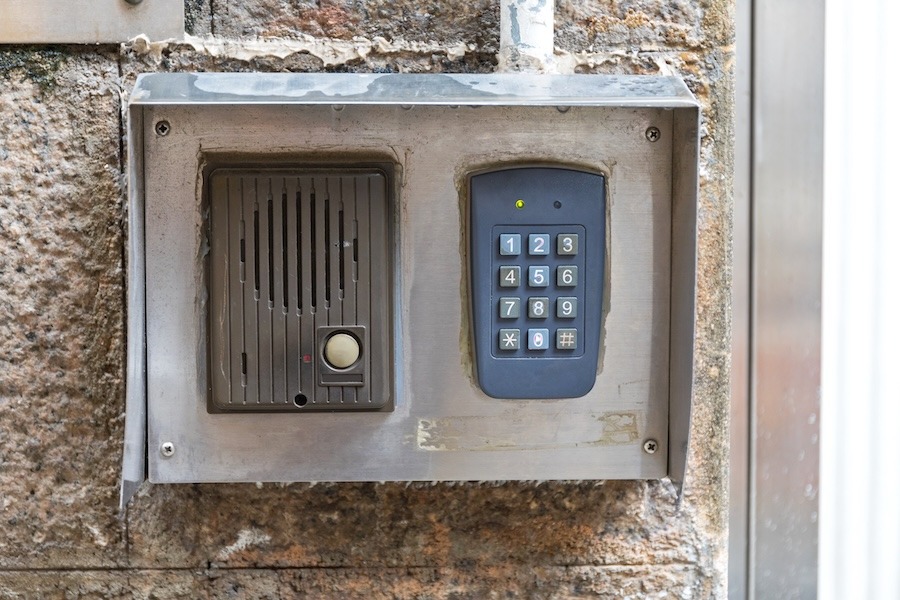
Keypads and card readers face more direct exposure. Plastic housings can crack or fade, buttons can become unresponsive, and displays can wash out under intense sun. Dust can work its way into housings and interfere with infrared sensors or electronic contacts.
Remote controls stored in vehicles endure similar stress. A remote left on a dashboard in summer heat can suffer battery degradation or internal damage that shortens its useful life.
Maintenance intervals in this climate tend to be shorter than in more moderate environments. Components that might last a decade elsewhere may need attention sooner when exposed to desert conditions year-round.
Setting Realistic Expectations for Long-Term Use
A boom gate system installed correctly will open reliably for years, but no installation remains maintenance-free indefinitely. Loops, remotes, keypads, sensors, and control boards all have service lives that depend on usage, environment, and quality of original installation.
Consistent opening depends on keeping all these components in working order, not just the boom arm itself. A system that worked flawlessly for five years can start showing inconsistency if a remote battery weakens, a loop connection corrodes, or a sensor drifts out of alignment.
Recognizing that trigger behavior reflects the condition of multiple parts helps property owners respond appropriately when issues arise. A boom arm that hesitates is rarely a problem with the motor. More often, the cause lies somewhere in the chain of detection, access control, or safety devices feeding signals to the controller.
DNG Automatic Gates has worked with property owners across the Las Vegas Valley for more than 12 years, and owner Dave Williams brings over 25 years of hands-on experience with these systems. That field knowledge shapes how we approach installation, configuration, and ongoing service for boom gates and pedestrian access points alike.
When to Request a Professional Evaluation
If your boom gate triggers inconsistently, if you are unsure whether your loops, remotes, or safety sensors are functioning as intended, or if you are planning a new installation or upgrade, a professional evaluation can clarify what your system needs.
You can visit the DNG Gates Contact Page or call (702) 505-3107 to discuss your specific situation and request a free estimate.


