
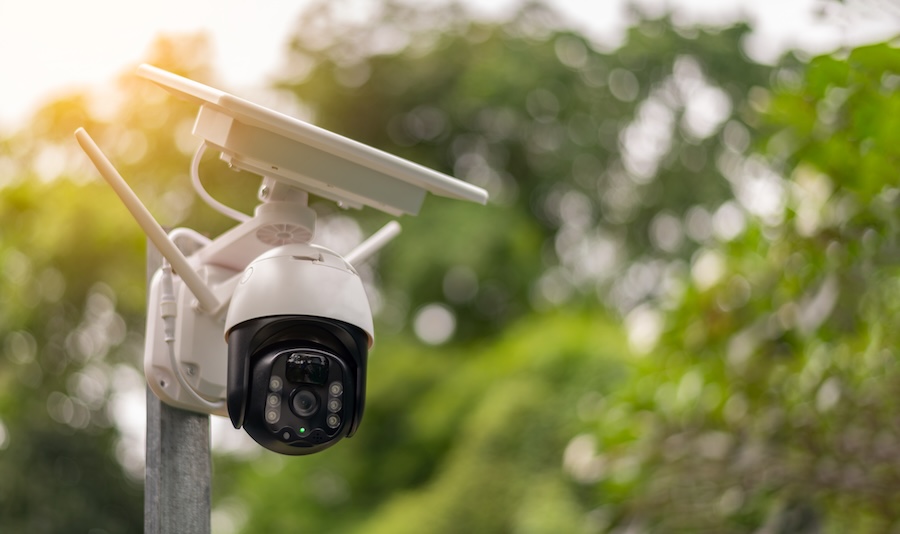
Legal rules for CCTV camera placement in Las Vegas center on one core principle: you can monitor your own property, but you cannot point cameras where others have a reasonable expectation of privacy. Nevada privacy statutes and local nuisance codes establish these boundaries, and understanding them before installation prevents disputes down the road. For property owners considering CCTV systems as part of a broader security setup, knowing where you can and cannot aim a camera matters as much as the equipment itself.
Why Camera Placement Creates Uncertainty for Property Owners
Property owners often feel unsure when positioning CCTV cameras near fences, gates, or shared property lines. A camera mounted to cover a driveway might seem straightforward until you realize the lens angle captures part of a neighbor’s yard or window.
This uncertainty is understandable. Most people install cameras to protect their property, not to create conflict. But a slight adjustment in mounting height or lens direction can mean the difference between a system that works without issue and one that invites complaints or legal action.
The challenge grows in residential areas where homes sit close together. In many Las Vegas neighborhoods, lot sizes and fence configurations make it difficult to monitor entry points without some portion of adjacent property appearing in the frame.
Commercial properties face similar concerns. A camera positioned to watch a parking lot or loading area may inadvertently capture neighboring businesses, public sidewalks beyond the property line, or residential windows across the street.
These situations do not require intent to cause harm. The legal question is whether the camera captures areas where someone else has a reasonable expectation of privacy. That standard applies regardless of why the camera was pointed in a particular direction.
How CCTV Systems Work and Where They Typically Monitor
CCTV systems capture video through fixed or adjustable lenses mounted on structures like gate posts, building corners, or dedicated poles. The footage transmits to monitors, recording devices, or smartphone apps for real-time or stored viewing.
Residential installations in the Las Vegas Valley typically focus on driveways, front entries, side gates, and backyard access points. These are the areas where security concerns concentrate: package deliveries, visitor arrivals, and potential intrusion attempts.
Commercial properties expand this coverage to parking lots, loading docks, perimeter fencing, and building entrances. The goal is continuous oversight of high-traffic areas where incidents are most likely to occur.
The key distinction in all cases is between monitoring spaces you control and capturing footage of spaces you do not. Your driveway, your gate, your front porch—these are within your property boundaries. A neighbor’s backyard, their windows, or their interior spaces are not.

Modern cameras often include pan-tilt-zoom capabilities that allow remote adjustment of viewing angles. While this adds flexibility, it also creates the potential for views to shift into prohibited areas. Software-based zoning features can restrict movement to stay within property boundaries, but not all systems include this functionality.
Fixed-lens cameras eliminate the adjustment risk but require careful initial positioning. Once mounted, the viewing angle remains constant, making proper installation critical to long-term compliance.
What Matters for Reliability, Durability, and Long-Term Use
Camera reliability in the Las Vegas Valley depends on more than just equipment quality. Desert conditions introduce challenges that affect performance over time.
Dust accumulation on lenses is a constant issue. Wind-blown particles settle on camera housings and obscure image clarity, requiring regular cleaning to maintain usable footage. Systems positioned near unpaved areas or open desert face this problem more severely than those in developed neighborhoods with established landscaping.
Extreme heat pushes operating limits. Summer temperatures exceeding 110°F stress internal components, particularly in cameras without adequate ventilation or protective enclosures. Over a span of five to seven years, heat exposure causes sensor degradation and reduced image quality even in well-maintained systems.

Weatherproof housings rated for desert conditions extend service life but do not eliminate maintenance needs. Quarterly inspections of mounts, wiring connections, and lens cleanliness help catch problems before they affect security coverage.
Usability improvements in recent years include app-based viewing and zoning features that allow property owners to define which areas the camera monitors. Some systems automatically blur or mask footage from off-property zones, addressing privacy concerns through technology rather than relying solely on physical positioning.
Long-term costs extend beyond the initial purchase and installation. Cleaning, component replacement, and periodic recalibration are part of owning a system that performs reliably year after year.
Common Misunderstandings About Camera Placement Rules
A widespread assumption is that cameras can point anywhere as long as they are mounted on your own property. This belief misunderstands how privacy law works.
The physical location of the camera is not the determining factor. What matters is what the camera sees. A camera bolted to your fence post is on your property, but if the lens captures your neighbor’s bedroom window, the footage violates their reasonable expectation of privacy.
Nevada Revised Statutes address this directly. NRS 200.650 prohibits recording in places where privacy is expected without consent. This applies to video footage, not just audio. Pointing a camera into a neighbor’s private outdoor space—a fenced backyard, a patio screened from public view—can fall within this prohibition.
Another outdated belief is that removing audio recording makes any video legal. While audio recording carries separate consent requirements under Nevada law, video-only footage still violates privacy rules if it captures protected areas.
Some property owners assume homeowner association rules universally prohibit cameras. In practice, HOA policies vary widely across Las Vegas communities. Many allow camera installations that do not create visual intrusions or aesthetic violations. Checking specific covenants before installation avoids surprises.
Older analog systems installed years ago often lack the zoning features that help modern cameras stay within boundaries. These legacy installations may have operated without complaints for years, but they remain subject to current privacy standards if a neighbor raises a concern.
How These Rules Show Up in Daily Use Across Las Vegas
In residential settings, cameras typically watch gate entries for visitor arrivals, package deliveries, and vehicle access. A camera covering a driveway gate captures footage every time someone approaches, building a record of activity that proves valuable if an incident occurs.
Wind-blown dust frequently obscures these recordings. A camera that provided clear images in spring may produce unusable footage by midsummer without cleaning. Property owners who check their systems regularly catch this degradation early.
Heat-related issues appear as intermittent failures. A camera may function normally in morning hours but shut down or produce distorted images during peak afternoon temperatures. Cooling enclosures and shaded mounting locations reduce this problem but add installation complexity.
Commercial properties experience these same challenges at larger scale. Parking lots require multiple cameras to eliminate blind spots, and each unit faces the same dust and heat
exposure. Maintenance intervals shorten compared to residential systems due to higher stakes and continuous operation.

Mounting angles occasionally shift over time. Thermal expansion, wind stress, or vibration from nearby gate operations can move a camera slightly off its original position. A quarterly check ensures the viewing angle remains where it was set and has not drifted toward prohibited areas.
How This Connects to Broader Access Control Planning
Questions about CCTV camera placement frequently arise during conversations about automatic gate installation and access control. Property owners thinking about security often consider cameras and gates together as complementary systems.
This makes practical sense. A gate controls physical access while cameras document who approaches and when. The two systems work together to create layered security that neither provides alone.
Professional installations account for camera placement as part of the overall project. Mounting locations, wiring runs, and viewing angles get planned alongside gate positioning and operator installation. This coordination prevents the kind of afterthought installations that create compliance problems or leave gaps in coverage.
For property owners in Las Vegas, Henderson, Pahrump, and throughout the Las Vegas Valley, these decisions benefit from local experience. Desert conditions, neighborhood configurations, and regional code requirements all affect what works in practice.
Understanding Boundaries Keeps Systems Effective and Compliant
Knowing where CCTV views can legally reach clarifies both the capabilities and limits of any camera system. The goal is security coverage that protects your property without creating liability or neighbor disputes.
Property line awareness comes first. Before any camera goes up, understanding exactly where your boundaries fall prevents positioning mistakes that invite complaints. From there, mounting heights, lens angles, and zoning features work together to keep footage within legal limits.
DNG Automatic Gates has served the Las Vegas Valley for more than 12 years, approaching CCTV installation as part of a broader access control and property security strategy. Owner Dave Williams brings over 25 years of hands-on industry experience to every project, helping ensure camera placement not only performs reliably in harsh desert conditions, but also aligns with practical coverage needs and legal considerations.
Whether you are planning a new CCTV system, upgrading existing surveillance, or integrating cameras with an automatic gate system, a professional consultation can help clarify what setup makes the most sense for your property. DNG Automatic Gates works with residential and commercial properties throughout Las Vegas, Henderson, Pahrump, and the surrounding valley.
Ready to improve your property’s security and visibility? Schedule a free estimate today by visiting https://dnggates.com/contact or call 702-505-3107 to speak with the Las Vegas team.


