
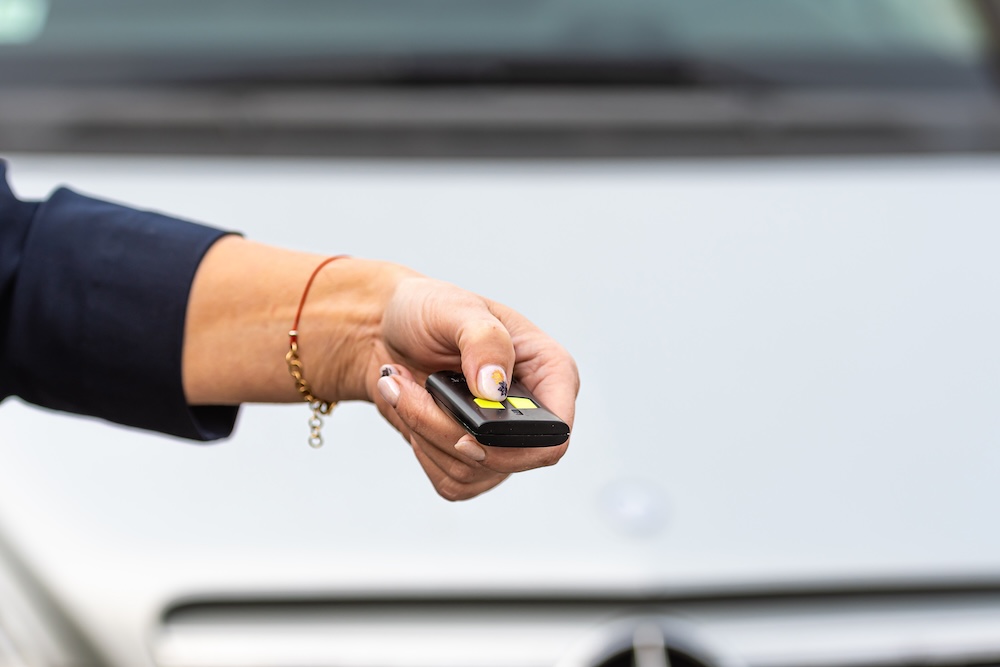
Programming a gate remote works by syncing a unique code from the transmitter to the receiver mounted on your gate opener’s control board. This process applies whether you have the original remote or need to program a replacement after losing one. For property owners across Las Vegas, Henderson, and the surrounding valley, understanding how this works helps maintain reliable access through swing gates, slide gates, and barrier systems that face constant exposure to desert heat and dust.
The core principle remains consistent across most automatic gate systems. The remote sends a radio signal at a specific frequency, and the receiver recognizes that signal when the codes match. When the original remote goes missing, the gate itself still retains the programming capability in its receiver. A compatible replacement remote can be added to the system without replacing the entire opener.
How Gate Remote Programming Actually Works
The remote transmitter sends a radio code at either 315 MHz or 390 MHz, depending on the manufacturer and model. The receiver on the control board picks up this signal and triggers the gate operator when it recognizes a matching code.
Modern systems primarily use rolling codes, which change with each use. This prevents code grabbing, where someone captures your signal and duplicates it. Older systems used fixed codes, which remain the same every time.
To program a remote, the receiver must enter learning mode. This typically involves pressing and holding a learn button on the control board until an LED indicator flashes. Once in this mode, pressing the remote button one to three times sends its code to the receiver.
The LED confirms the sync with a solid light or specific flash pattern. At that point, the remote is paired to the system.

Without the original remote, the process stays the same. The receiver does not need the original to add new remotes. Most residential receivers support eight to fifty programmed remotes, so adding replacements does not require erasing existing ones unless you choose to reset the system.
Older systems used DIP switches instead of learn buttons. These require physically matching tiny switches on the remote to identical switch positions on the receiver. Each switch represents a binary digit, creating a unique code pattern.
DIP switch systems were common before 2010 and still appear on some legacy commercial installations. In dusty Las Vegas conditions, these switches can wear out or collect debris that causes misalignment.
Finding and Using a Compatible Replacement Remote
Not all remotes work with all gate systems. Frequency and code type must match the receiver.
A remote operating at 315 MHz will not communicate with a 390 MHz receiver. Similarly, a fixed-code remote cannot sync with a rolling-code system.
Brand compatibility matters as well. LiftMaster remotes will not program to Viking receivers. Each manufacturer uses proprietary protocols that prevent cross-brand operation.
When purchasing a replacement, identify your gate operator brand and model first. The control board or the original documentation typically shows this information. Compatible remotes are available through the manufacturer or authorized distributors.
Universal remotes exist but require careful verification of frequency and code type before purchase. Many that claim universal compatibility still have limitations.
Once you have the correct remote, locate the learn button on the receiver. On many systems, this button sits on or near the control board, sometimes behind a cover panel. Pressing and holding it for five to ten seconds initiates programming mode.
With the LED flashing, press the remote button firmly. The LED response confirms successful pairing. Test the remote immediately by operating the gate through a full open and close cycle.
Test range as well. Stand fifty to one hundred feet from the gate and verify the signal reaches the receiver. Metal gate panels and nearby structures can reduce effective range.
Why Desert Conditions Affect Remote Performance
Las Vegas Valley temperatures regularly exceed 100 degrees Fahrenheit during summer months. This heat directly impacts remote performance.
Standard alkaline batteries drain faster in extreme heat. A remote that lasts two years in moderate climates may fail within twelve months in Southern Nevada. Lithium batteries handle temperature extremes better and maintain voltage longer under these conditions.

Heat also affects signal strength. Expect range reductions of twenty to thirty percent during peak summer temperatures. A remote that works reliably at seventy-five feet in spring may only reach fifty feet in August.
Dust accumulation presents another challenge. Wind-blown debris enters button mechanisms and collects on electrical contacts. This buildup causes intermittent response or complete failure.
Cleaning contacts periodically helps maintain function. A dry cloth or contact cleaner removes residue without damaging internal components.
Metal-bodied remotes withstand wind-blown debris better than plastic housings. Plastic also degrades under constant UV exposure, becoming brittle and prone to cracking.
Commercial properties with fleets of remotes experience these issues at scale. Annual reprogramming often becomes necessary after monsoon season power surges or when batteries fail across multiple units simultaneously.
High winds can also interfere with signal transmission. Mounting receivers higher on the gate post, away from ground-level dust and debris, improves reliability during windstorms.
What Programming Does Not Verify
Successfully programming a remote confirms only that the transmitter and receiver communicate. It does not test safety systems.
Automatic gates in Clark County must comply with UL325 standards, which require photo eyes, edge sensors, or other entrapment protection. These safety devices operate independently of the remote signal.
After programming a new remote, always verify the gate reverses properly when obstructed. Place an object in the gate path and confirm the system detects it and stops or reverses.
Power surges can erase programmed codes while leaving safety systems unaffected, or vice versa. Both require independent verification after electrical events.
Remotes also do not indicate battery status on the receiver side. The control board may have a backup battery that maintains programming during power outages. If this battery fails, programmed codes can be lost.

Regular maintenance checks should include verifying all programmed remotes still function and safety systems respond correctly. This becomes especially important for commercial properties where multiple users depend on consistent access.
Working With Gate Systems Over Time
Gate remotes function as one component within a larger access control system. The remote, receiver, control board, operator motor, and safety devices all work together.
When remotes repeatedly desync or fail to program, the issue may extend beyond the remote itself. Control boards can develop faults. Receivers can fail. Wiring connections can loosen from thermal expansion and contraction cycles common in desert climates.
Residential users typically operate one or two remotes. Testing function weekly and replacing batteries annually prevents most issues.
Commercial properties managing twenty or more remotes benefit from documented programming records. Tracking which remotes are active, when batteries were replaced, and which users have access simplifies troubleshooting.
Modern systems increasingly offer smartphone app integration through platforms like myQ or similar services. These replace physical remotes with Bluetooth or WiFi connections, allowing programming through the app interface and providing usage logs.
Questions about programming gate remotes often come up during installation, repair, or system evaluation, particularly when property owners begin experiencing access issues or updating older equipment. DNG Automatic Gates has worked with residential and commercial properties throughout the Las Vegas Valley for more than 12 years, helping clients navigate situations where access control, safety systems, and reliable gate operation all need to work together properly.
For property owners evaluating gate system performance or needing assistance with remote programming, a consultation can help clarify what the current system supports and whether adjustments, repairs, or upgrades make sense for long-term function. Those considering installation, service, or access control improvements can also request a free estimate by visiting DNG Gates Contact Page or calling (702) 505-3107 to discuss their specific situation.


