
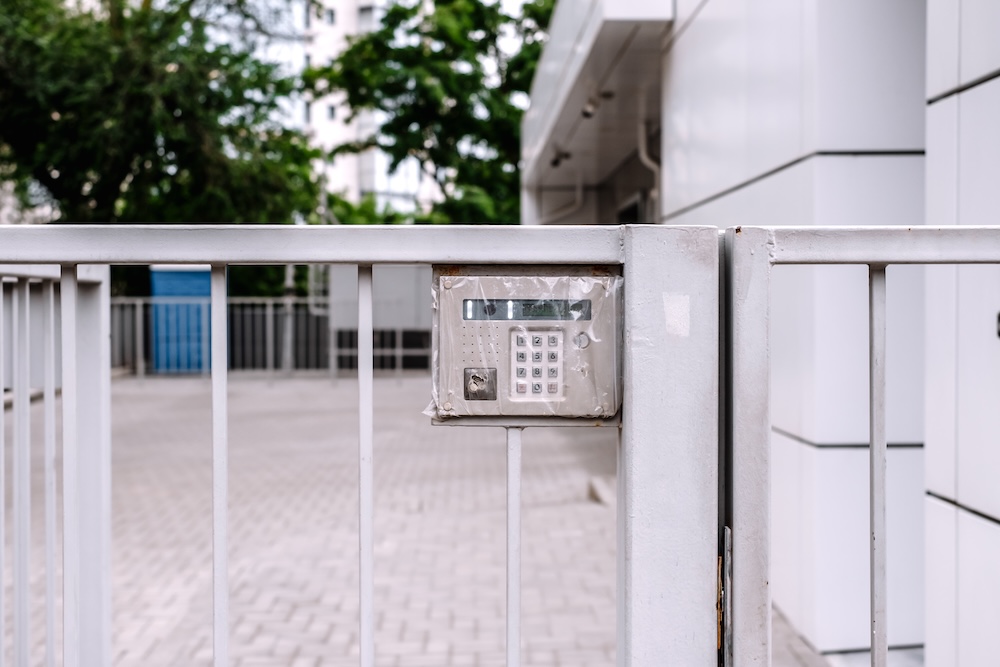
Most gate keypads used in residential and commercial telephone entry systems can store anywhere from a few dozen to several hundred individual entry codes, depending on the system’s design and intended application. The actual capacity varies based on the type of keypad, the control board it connects to, and whether the system is standalone or integrated with broader access control infrastructure.
For property owners in Las Vegas and the surrounding valley, understanding these limits helps when planning for current needs and future growth. This article explains what affects code capacity and how it shows up in real-world gate installations. For a broader look at how these systems work, visit the telephone entry systems overview.
What Determines How Many Codes a Gate Keypad Can Store
The number of entry codes a gate keypad can hold depends primarily on the control board or processor inside the system. Entry-level standalone keypads designed for single-family homes typically store between 10 and 50 codes. These units work well when access is limited to household members, a few regular visitors, or service providers.
Mid-range systems found in gated communities, small apartment complexes, or commercial properties often support 100 to 500 individual codes. These keypads connect to more advanced control boards that can manage multiple users, assign time-based restrictions, and track entry logs.
Higher-end telephone entry systems integrated with access control software can store thousands of codes. These are common in large multi-tenant buildings, business parks, and secured commercial facilities where user turnover is high and access management needs to scale.
The physical keypad itself does not always determine capacity. In many cases, the keypad is simply an input device. The control board behind it handles code storage, validation, and communication with gate operators. Understanding this distinction matters when evaluating whether a system can grow with a property’s access needs.
Memory type also plays a role. Older systems may use limited onboard memory, while newer units often support expandable storage or cloud-based management. Properties in the Las Vegas Valley with plans to expand or add tenants benefit from selecting systems with room to grow.
How Code Capacity Affects Residential and Commercial Applications
Residential gate systems in single-family or small multi-family settings rarely need more than a few dozen codes. A typical homeowner may program codes for family members, housekeepers, landscapers, and occasional guests. Standalone keypads in this range offer simple programming and reliable performance without unnecessary complexity.
Gated communities with shared entry points require larger capacity. When multiple households share a single gate, each residence may need its own code or set of codes. A community of 50 homes could easily require 100 or more unique codes when accounting for residents, property managers, and service personnel.

Commercial properties introduce different demands. A business park with rotating tenants, delivery schedules, and employee access may need systems that support 500 or more codes. In these environments, the ability to add, remove, or modify codes quickly becomes essential. Systems that require manual reprogramming at the keypad can create delays and security gaps.
Telephone entry systems designed for commercial use often include remote management features. Administrators can add or revoke codes from a central location without visiting the gate. This functionality proves valuable in high-turnover settings where access changes frequently.
Properties in Henderson, Pahrump, and across the Las Vegas Valley face additional considerations. Dust, heat, and direct sun exposure can affect keypad reliability over time. Selecting hardware rated for outdoor use in desert conditions helps maintain consistent performance regardless of code load.
Practical Limits and What Happens When Capacity Is Reached
When a gate keypad reaches its storage limit, no additional codes can be added until existing codes are deleted. In standalone systems, this often means manually reviewing and removing outdated entries. Without clear records, identifying which codes are still in use can be difficult.
Some systems display error messages or refuse new entries when memory is full. Others may overwrite older codes without warning, which can lock out active users unexpectedly.
Understanding how a specific system handles capacity limits helps avoid access disruptions.
Properties that frequently add and remove users benefit from systems with logging features. Entry logs show which codes are used and when, making it easier to identify dormant entries that can be cleared. This is especially useful in rental properties, gated communities, and commercial facilities with changing tenants.
Code length also affects capacity in some systems. Keypads that allow longer codes may store fewer total entries due to memory allocation. Conversely, systems optimized for shorter codes can often hold more entries but may offer less security against guessing.
For properties expecting growth, it is worth asking about capacity before installation. Replacing a keypad or control board later to accommodate more users adds cost and downtime. Planning for realistic future needs upfront avoids these issues.
Proper installation also affects long-term reliability. Control boards exposed to moisture or extreme heat may experience memory errors or data loss. Enclosures rated for desert conditions and correct wiring practices help protect stored codes over time.
How System Integration Expands Code Management Options
Standalone keypads operate independently and store all codes locally. Integrated systems connect keypads to central access control platforms, often expanding code capacity significantly and adding management tools.
Integrated systems allow administrators to manage codes from a computer, tablet, or phone. Adding a new user takes seconds, and access can be revoked immediately when needed. This approach reduces the risk of forgotten codes remaining active after a tenant moves out or an employee leaves.
Some integrated platforms support temporary codes that expire after a set time or number of uses. Delivery drivers, contractors, or short-term guests can receive access that automatically deactivates without manual intervention.
Cloud-based systems store code data remotely, which means the physical keypad’s memory is no longer the limiting factor. These systems can support thousands of users and provide detailed access logs for security review.

For commercial properties in the Las Vegas Valley, integration with existing security infrastructure adds value. Cameras, intercoms, and alarm systems can work together with gate access controls to provide layered security. DNG Automatic Gates has installed and serviced these types of systems across the region for over 12 years, working with property managers and business owners to match system capacity with actual operational needs.
Residential properties with simpler requirements may not need full integration. However, even mid-range systems with basic remote management can reduce the hassle of maintaining code lists manually. The right balance depends on how many users need access and how often that list changes.
What Las Vegas Property Owners Should Consider
Choosing a gate keypad system involves more than picking a model with enough code slots. The environment, expected usage patterns, and long-term plans all influence which system fits best.
Desert heat in Southern Nevada accelerates wear on electronic components. Keypads and control boards installed in direct sun may require more frequent maintenance or replacement. Shaded mounting locations and properly rated enclosures extend service life.
Dust infiltration affects keypads with exposed buttons or unsealed housings. Systems designed for outdoor installation in harsh climates resist these issues better than indoor-rated equipment repurposed for exterior use.
Wind-driven debris can also impact keypad function over time. Recessed mounting or protective covers help reduce exposure without interfering with daily use.
For gated communities and multi-tenant properties, selecting a system with room to grow avoids the cost of early replacement. A system rated for 200 codes may seem sufficient today but could fall short within a few years as occupancy changes.
Working with an installer who understands local conditions and access control requirements can make a significant difference in how well a keypad system performs over time. DNG Automatic Gates has served property owners throughout Las Vegas, Henderson, and the surrounding valley for more than 12 years, bringing practical experience gained from installing and maintaining gate and access systems in Southern Nevada’s desert conditions year-round.
Understanding how many codes a keypad can support—and how that capacity fits into the broader access control needs of a property—is often easier when evaluated alongside traffic patterns, user access requirements, and long-term management expectations. Property owners considering installation, repairs, upgrades, or access control adjustments may benefit from a consultation or system evaluation to discuss what configuration best fits their situation. Additional information or a free estimate is available through the DNG Gates Contact Page or by calling (702) 505-3107.


