
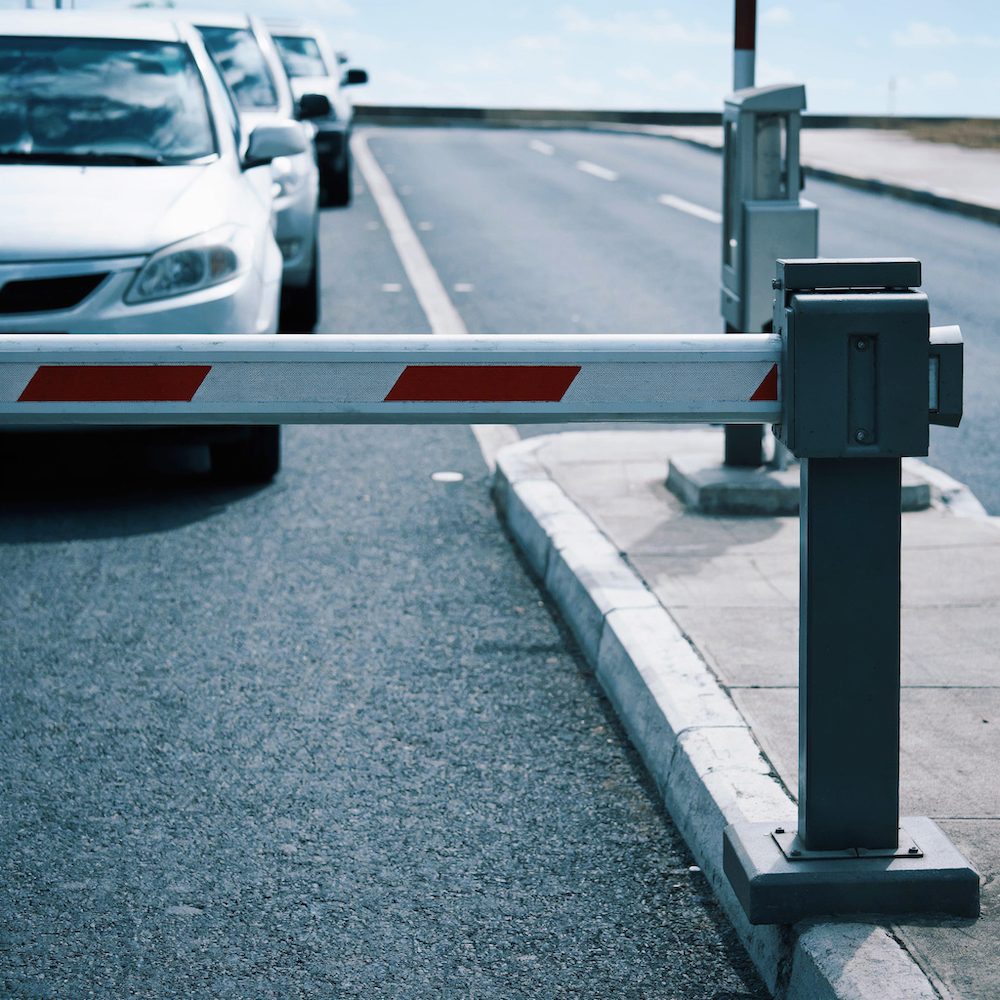
A barrier arm gate is a motorized horizontal arm that raises and lowers to control vehicle access at driveways, lanes, and parking areas. It works best in locations with regular traffic where the goal is managing who drives in rather than creating a solid physical barrier or full privacy enclosure.
In the Las Vegas Valley, barrier arm gates appear most often at community entrances, parking structures, and commercial properties. The desert environment means the operator’s durability and safety features matter just as much as the arm itself.
For properties where pedestrians also need access, these systems typically work alongside separate pedestrian gates that provide safe foot traffic routes away from moving vehicle equipment.
How a Barrier Arm Gate Works and What It Is Designed to Do
A barrier arm gate uses a powered operator to move a horizontal arm up to allow a vehicle through and down to block the lane. The arm pivots from one side while leaving the space beneath mostly open, which distinguishes it from solid swing or slide gates that close off an entire opening.
These systems connect to access control devices like keypads, card readers, or remote controls that signal when the arm should move. When a driver presents valid credentials, the control logic triggers the operator to raise the arm. After the vehicle clears the lane, the arm lowers to its blocking position.
The primary purpose is traffic management rather than high-security perimeter control. Barrier arm gates help slow and organize vehicles at single-lane entry and exit points. They discourage casual drive-through traffic and allow property managers to track who enters and when.
Because the arm does not seal off the opening completely, it functions more as a deterrent and control point than a physical barrier. Someone determined to bypass it could potentially step around or even force past the arm. This is an important distinction for property owners who need to match their expectations to what the equipment actually provides.
Modern operators typically include features like adjustable opening speeds, soft start and stop functions, and built-in obstruction sensing. These characteristics help the system handle frequent use while reducing wear on mechanical components over time.
In high-traffic Las Vegas properties, the gate may cycle hundreds of times per day during peak hours. Operators built for these demands include higher cycle ratings and components designed to tolerate sustained use without overheating or premature failure.
Where Barrier Arm Gates Make the Most Sense
Barrier arm gates fit best in locations where speed and traffic flow matter more than creating a complete physical boundary. Parking garages, gated community entrances, commercial lots, hospitals, and business parks are common applications throughout the Las Vegas Valley.
These environments share a need to control vehicle access at defined entry and exit points without causing significant traffic backups. A barrier arm can open and close faster than many full-size swing or slide gates, which helps keep vehicles moving during busy periods.
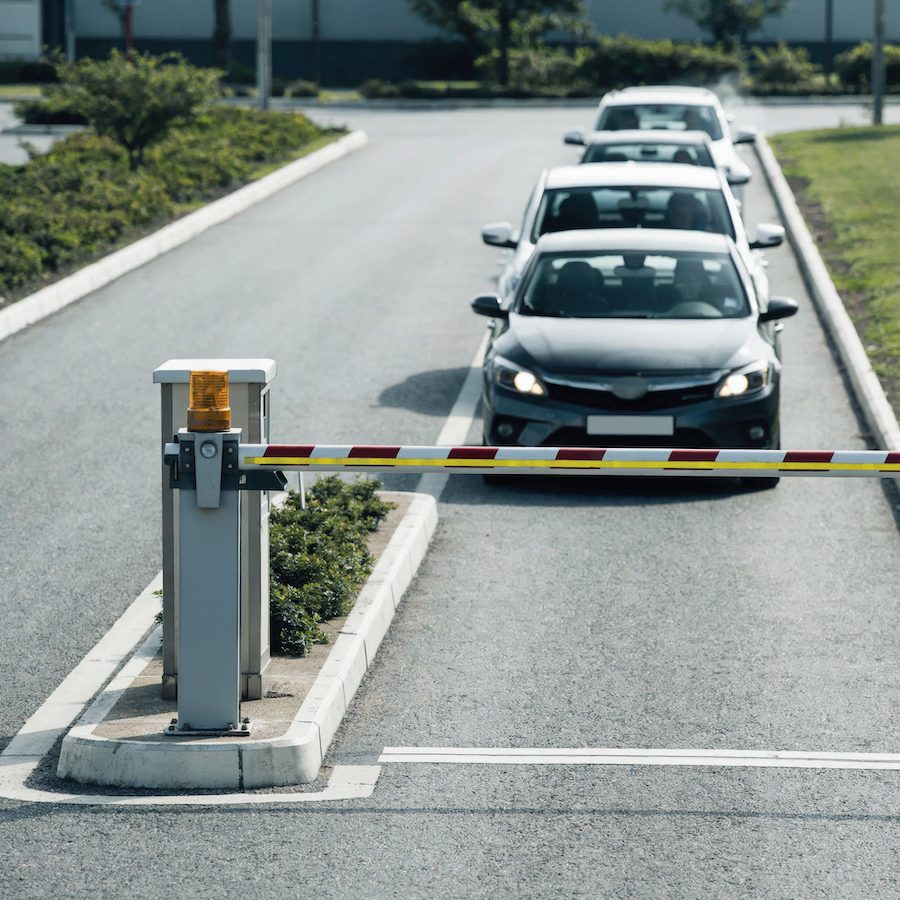
In desert conditions, barrier arm gates offer some practical advantages. They have fewer large moving panels exposed to wind compared to wide solid gates that can catch strong gusts. This stability matters in Southern Nevada where sudden wind events are common.
However, the exposed mechanical components and electronics still face challenges from heat, dust, and intense sun. Proper housing and weather protection become important factors in long-term performance. Operators without adequate shielding can experience accelerated wear on motors, control boards, and wiring insulation.
For mixed-use properties where both vehicles and pedestrians need access, barrier arm gates work best when paired with separate pedestrian gates and clearly marked walkways. The arm is designed for vehicles, not people. When foot traffic shares the same lane, it creates awkward situations and potential safety concerns.
Residential communities with single-lane entrances often use barrier arm gates to manage guest access and track resident entry. Commercial properties use them to control employee parking, monitor vendor deliveries, or manage customer access to paid parking areas.
Properties that need visual privacy or sound reduction will find barrier arm gates insufficient for those purposes. The open design does not block views or noise. Its role is controlling when and how vehicles pass through a specific point, not creating an enclosed boundary.
Reliability and Maintenance Expectations in Desert Conditions
For property owners and managers in Las Vegas, Henderson, Pahrump, and surrounding areas, the real-world experience with a barrier arm gate comes down to how smoothly and reliably it operates day after day. High temperatures, dust, and constant sun exposure test every component over years of daily use.
Heat causes expansion and contraction in metal parts and can stress electronic components. Dust works into pivot points, drive mechanisms, and sensor housings. UV exposure degrades plastics, rubber seals, and wiring insulation over time. These factors mean that equipment rated for moderate climates may not hold up as well in Southern Nevada.
Operators built for high cycle counts handle the demands of busy properties better than residential-grade equipment pushed beyond its design limits. In commercial or multi-tenant settings where the gate runs almost constantly during peak hours, the difference in operator quality shows up in long-term reliability and repair frequency.
Moving parts like springs, drive belts, and pivot assemblies experience wear proportional to use. In a system that cycles hundreds of times daily, these components will eventually need attention. Periodic inspection catches developing issues before they cause unexpected failures.
Safety devices require ongoing verification to function correctly. Photo-eyes can become coated with dust or knocked out of alignment. Loop detectors buried in pavement need proper sensitivity settings. Force limits in the operator should be tested to confirm the arm responds appropriately when it encounters resistance.
Long-term costs are shaped less by the arm itself and more by operator quality, safety equipment, and maintenance consistency. A well-built system with regular service typically provides years of reliable operation. A lower-quality installation with deferred maintenance tends to generate more emergency repairs and shorter overall service life.
In multi-tenant environments, user behavior also affects equipment longevity. Arms propped open, repeated impacts from vehicles misjudging timing, or bypassed safety devices all add stress and shorten the interval between repairs.
Common Misunderstandings About Barrier Arm Gates
A frequent misunderstanding is that a barrier arm gate provides the same security as a full gate or solid fence. In practice, the arm serves primarily as a traffic control measure and visual deterrent. It manages and slows vehicle entry rather than preventing determined bypass attempts.
Another outdated assumption is that once installed, the system will run indefinitely with little attention. Moving components, springs, and safety sensors all require periodic inspection and maintenance. This is especially true in hot, dusty climates where environmental stress accelerates wear.

Some property owners still view barrier arms as basic, manual-style devices. Modern systems rely heavily on integrated access control electronics and safety sensing that also need to be kept in proper working order. Neglecting these components can lead to unreliable operation or safety issues.
There is also confusion around pedestrian safety. Many people assume it is acceptable for pedestrians to duck under the arm or share the same lane as vehicles. The equipment is designed for vehicle use. Foot traffic works best when directed through separate pedestrian gates rather than through vehicle lanes with active equipment.
Older experiences with simple or poorly protected systems sometimes create the belief that barrier arms inevitably damage vehicles during malfunctions. Current equipment, when installed and maintained correctly, uses force limits and multiple sensing layers to reduce contact risk. However, these protections only work when the safety devices remain functional and properly configured.
The belief that barrier arm gates are low-maintenance also deserves correction. While they may have less material bulk than full-panel gates, their long-term demands center on operator reliability, safety device function, and regular service. Skipping maintenance does not eliminate the need for attention. It simply converts routine service into unplanned repairs and potential safety concerns.
Evaluating Whether a Barrier Arm Gate Fits Your Property
Understanding barrier arm gates as vehicle-focused traffic control tools helps set realistic expectations about where they belong and what they accomplish. They manage access at defined entry points without providing the privacy, security, or boundary control of solid gate systems.
In the Las Vegas Valley, where heat, dust, and high traffic are part of everyday operation, long-term performance depends on appropriate application, quality installation, and consistent maintenance attention. Separating pedestrian movement from vehicle lanes with dedicated pedestrian gates improves both safety and daily usability.
Properties with simple access control needs and regular vehicle traffic often find barrier arm gates to be a practical fit. Those requiring full perimeter security, visual privacy, or sound reduction should consider whether a different gate type better matches their actual requirements.
DNG Automatic Gates has served the Las Vegas Valley for more than 12 years. Owner Dave Williams brings over 25 years of hands-on industry experience working with barrier arm systems, pedestrian gates, and access control configurations across residential and commercial properties.
If you are considering a barrier arm gate or evaluating whether your current system meets your property’s needs, a consultation can help clarify the options. Visit the DNG Gates Contact Page or call (702) 505-3107 to discuss your specific situation and request a free estimate.


