
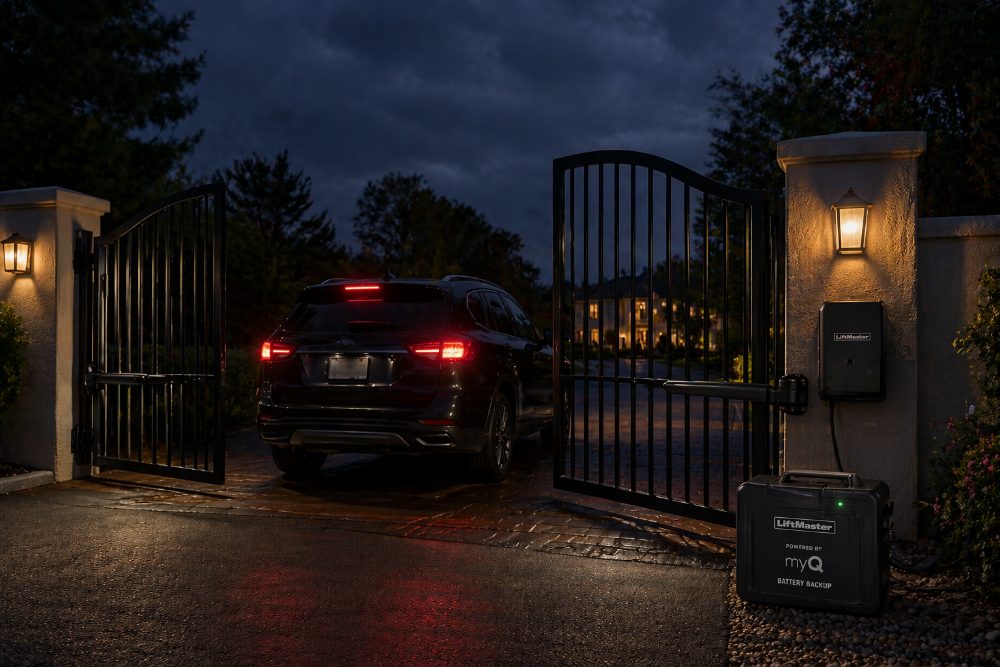
Yes, electric gates can be opened manually using built-in override mechanisms that come standard on modern systems. These mechanisms—typically crank handles, clutch releases, or key-operated disengagements—allow property owners to operate their gate by hand when power is unavailable or the motor encounters issues. For properties throughout the Las Vegas Valley, this feature proves essential given the region’s power fluctuations during storms and the mechanical stress that desert conditions place on automatic gate systems.

Understanding how manual operation works helps property owners avoid the assumption that a power outage means permanent lockout. The reality is more practical than most people expect.
How Manual Override Mechanisms Work on Automatic Gates
Every automatic gate system consists of three primary components working together: a motor operator that drives movement, a control board that manages timing and signals, and mechanical linkage that physically connects the motor to the gate structure. Manual override functions by disconnecting the motor from the mechanical linkage, allowing the gate to move freely by hand.
On residential swing gates, this typically involves a key-released lever or clutch mechanism located near the motor housing. Turning the release disengages the gears, and the gate can then be pushed open or closed without resistance from the motor. The process takes seconds once you know where the release point is located.
Slide gates operate on a similar principle but often require more effort due to their weight and track-based movement. Commercial slide gates frequently include extended crank handles that provide mechanical advantage for moving heavier panels. These cranks attach to the drive mechanism and allow manual operation without requiring excessive force.
Barrier arm gates use comparable release systems, though their lighter weight makes manual lifting straightforward once the motor disengages. The key distinction across all types is that manual operation is designed into the system from the start—not an afterthought or emergency workaround.
Post-2010 automatic gates sold in the United States must comply with UL 325 safety standards, which mandate disconnect mechanisms specifically for emergency access situations. This requirement exists because reliable egress and ingress cannot depend entirely on electrical power.
Why Manual Access Matters in Southern Nevada Conditions
Desert conditions in the Las Vegas Valley create specific challenges that make manual override capability more than a theoretical backup feature. High heat, persistent dust, and seasonal wind events all affect gate operation in ways that property owners encounter regularly.
Daily temperatures exceeding 100°F during summer months cause metal components to expand. This thermal expansion can temporarily affect gate alignment and motor performance, occasionally requiring manual intervention until components cool in the evening. The effect is more pronounced on darker-colored gates and south-facing installations that absorb maximum solar radiation.

Dust presents an ongoing maintenance factor that directly impacts manual operation. Wind-driven alkali dust and fine caliche particles accumulate in gate tracks, rollers, and clutch mechanisms over time. When these particles embed in moving parts, they create friction that stiffens manual operation. A gate that releases smoothly after installation may require noticeably more effort to move by hand after a year without cleaning.
Spring windstorms in the Las Vegas Valley frequently bring sustained gusts between 25 and 50 miles per hour. These events blow debris into tracks and photo eye sensors, sometimes triggering safety stops that prevent automatic operation. Manual override allows continued access while the obstruction is addressed.
Monsoon season adds another dimension. Power outages during summer storms coincide precisely with moments when reliable property access matters most. A functioning manual release means the difference between waiting out an outage and maintaining normal movement in and out of the property.
Common Misconceptions About Electric Gate Operation
The most widespread misunderstanding is that automatic gates cannot be opened at all without electricity. This belief stems from unfamiliarity with release mechanisms rather than any actual limitation of modern systems. Many property owners never locate their manual release point until they need it during an outage—and then assume the feature does not exist.
Another common error treats manual operation as evidence of system failure. In reality, using the manual release during a power outage is exactly what the mechanism is designed for. It represents planned redundancy, not breakdown. The gate functions as intended when manual operation provides access during electrical interruption.
Older gate systems installed before current safety standards sometimes lack integrated manual overrides. Properties with legacy equipment from the 1990s or earlier may still have gates that depend entirely on electrical power. These installations can be upgraded with modern operators that include manual release capability, but the original equipment genuinely may not have offered this feature.
The “set it and forget it” expectation also causes problems in practice. Some property owners assume automatic gates require no attention between professional service visits. Desert dust infiltration means that manual release mechanisms need periodic lubrication and cleaning to function smoothly. A clutch that worked easily at installation may bind after several years of accumulated grit if never maintained.
Understanding that manual operation requires the same environmental awareness as automatic operation helps set realistic expectations. The mechanism works reliably when maintained, but desert conditions demand attention that more temperate climates might not require.
What Manual Operation Looks Like in Daily Use
Residential property owners most commonly use manual override during power outages. The process involves locating the release mechanism—usually marked with a label or identified during installation—engaging the release, and then pushing or pulling the gate open. Swing gates pivot on their hinges with moderate effort. Slide gates roll along their tracks, requiring more sustained pushing for longer panels.
The physical effort required depends on gate size, weight, and track condition. A well-maintained residential slide gate moves relatively smoothly by hand. A commercial gate spanning a warehouse entrance requires significantly more effort or use of the crank mechanism designed for that purpose.
Commercial properties often keep manual release keys in designated locations known to authorized personnel. This prevents casual access while ensuring that maintenance staff or emergency responders can operate gates when needed. The keyed approach balances security requirements with practical accessibility.
Maintenance technicians encounter the effects of manual neglect regularly. Gates that have never had their clutch mechanisms cleaned often show visible dust accumulation and require cleaning before smooth manual operation returns. Annual lubrication of release points prevents this stiffening and keeps manual backup genuinely functional rather than theoretical.
Wind exposure affects manual operation during the actual process. Pushing a large gate panel against a strong gust requires considerably more effort than moving the same gate on a calm day. Commercial properties with gates in exposed positions factor this into their emergency access planning.
Battery backup systems extend automatic operation during outages but do not eliminate the need for manual capability. Batteries eventually deplete during extended outages, and mechanical issues unrelated to power still require manual backup. The two systems complement each other rather than making one redundant.
Understanding Manual Capability as Part of Long-Term Reliability
Manual override represents one component of overall gate system reliability rather than a separate emergency feature. Viewing it as integrated with normal operation helps property owners maintain realistic expectations about how automatic gates function over time.
The balance between automation and manual backup reflects practical engineering. Full dependency on electrical power creates a single point of failure that desert conditions regularly test. Built-in manual release provides a parallel path that remains functional regardless of power availability or motor status.
This redundancy matters for both residential and commercial applications, though the specifics differ. Residential systems prioritize quick homeowner access with simple release mechanisms.
Commercial systems emphasize controlled access through keyed releases while accommodating heavier gate structures with appropriate crank mechanisms.
Proper installation includes clear identification of manual release points and explanation of their use. Property owners who understand their system from the start maintain it more effectively and experience fewer surprises during actual outage situations.
Questions about manual gate operation frequently arise when property owners evaluate installation, repair, or system upgrades. In the Las Vegas Valley, where dust, heat, and wind affect gate performance year-round, these conversations benefit from hands-on familiarity with local conditions.
If you’re wondering how manual operation works with electric gates—or whether your current system will function reliably when it matters most—getting expert guidance can help you avoid costly surprises.
DNG Automatic Gates has worked with residential and commercial properties across Las Vegas, Henderson, and Pahrump for more than 12 years, with owner Dave Williams bringing over 25 years of direct industry experience to every installation and service call. That experience helps ensure systems are not only convenient, but also practical and dependable in real-world conditions.
Whether you’re planning a new installation or evaluating an existing gate, a consultation can help you understand how manual access, safety features, and system design come together for long-term reliability.
Need clarity on your setup? Call 702-747-5101 or visit DNGGates.com/contact to schedule a consultation with a local expert.


