
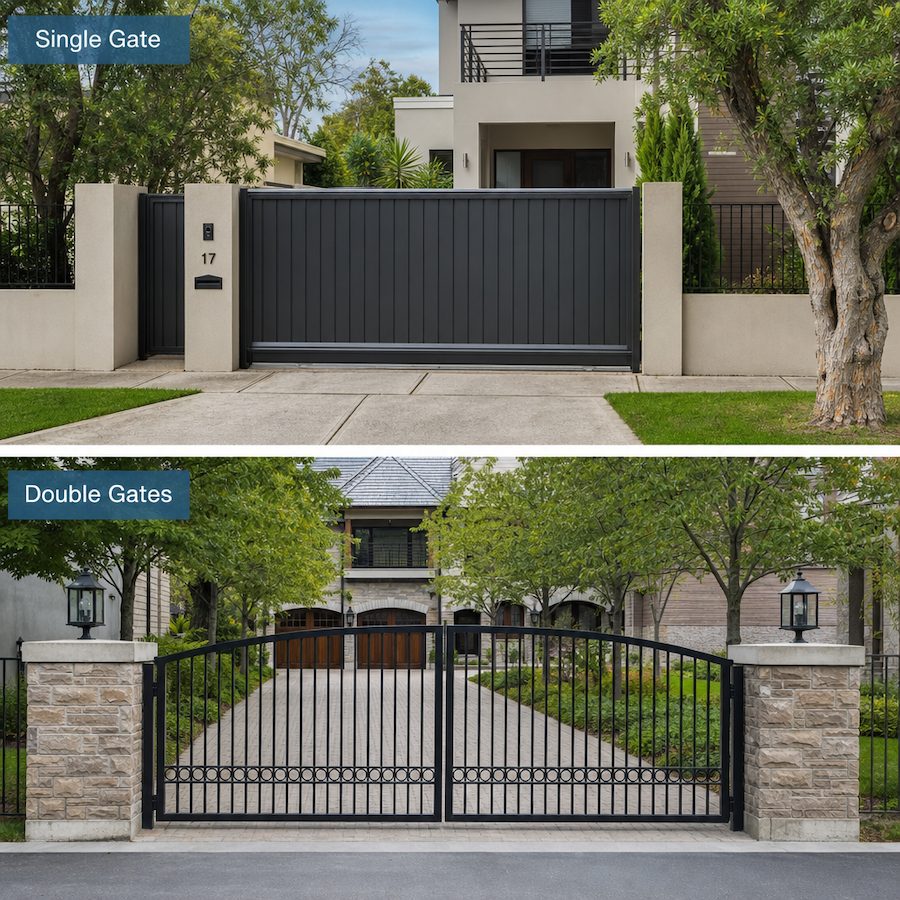
The difference between single and double driveway gates has less to do with appearance than most people expect. What matters more is how each configuration handles daily cycling, carries weight across its hardware, and holds up to heat, dust, and wind over years of use.
For property owners in Las Vegas and the surrounding valley, the right choice depends on matching the gate’s movement and load characteristics to the driveway’s width, traffic pattern, and environmental exposure.
Understanding how automatic gates actually behave in real conditions makes it easier to choose a setup that performs reliably without constant adjustment or premature wear.
How Single and Double Driveway Gates Actually Differ in Function
A single driveway gate consists of one panel that covers the entire opening and moves as a single piece when it swings or slides. A double driveway gate uses two panels that meet in the middle, with each side moving independently but working together to create one opening.
This distinction affects more than just how the gate looks from the street.
With a single gate, all the weight and movement concentrate on one side of the driveway structure. The hinge post or track system on that side carries the full load every time the gate cycles. Over thousands of open-and-close movements, this concentrated stress shows up in how the hardware wears and how the opener motor responds.
Double gates distribute that weight and movement across two sides. Each panel is lighter and shorter, which changes how forces act on the posts, hinges or rollers, and opener systems. However, two moving panels also mean two sets of components that can shift, sag, or fall out of alignment over time.
In automatic systems, both configurations use motors, control boards, and safety devices to move the gate without manual effort. The complexity of these systems means that how the gate is built and installed directly shapes how often it needs attention and how long it runs smoothly.
For property owners weighing these options, the practical question is not which style looks better. It is which configuration’s weight distribution, movement pattern, and hardware demands align with the driveway’s specific conditions and expected daily use.
Why Desert Conditions Change the Calculation
Las Vegas driveways face conditions that test automatic gates in ways that more moderate climates do not. Extreme heat, blowing dust, and sudden wind gusts are everyday realities, and each of these factors interacts differently with single and double gate setups.
Heat affects electronics, lubricants, and plastic components in opener systems. Control boards and safety sensors sit exposed to direct sun for much of the year. Over time, this heat exposure can degrade seals, dry out lubricants, and stress circuit boards regardless of whether the gate is single or double.

The difference shows up in how the mechanical load interacts with these conditions.
A single gate with a long, heavy panel acts like a sail when wind hits it. Strong gusts push against the full surface area, loading the opener motor and hinge hardware in ways that add stress beyond normal cycling. If the panel is tall or solid rather than slatted, wind resistance increases further.
Double gates present less surface area per panel, which can reduce wind load on each opener. However, wind can also push the two leaves unevenly, causing them to meet off-center or creating alignment issues over time.
Dust works its way into hinges, rollers, tracks, and motor housings. Fine desert particles accumulate in ways that affect smooth movement and can accelerate wear on moving parts. Both single and double gates face this exposure, but double gates have more hinge points and sometimes more track length where dust can collect.
These conditions do not make one configuration automatically better than the other. They make it important to think about how the chosen gate will handle the specific combination of heat, dust, and wind at the property’s location.
Common Assumptions That Lead to Regret
Many property owners approach the single versus double decision with assumptions that do not hold up under real-world use. These assumptions often lead to choices that seem right at first but create frustration later.
One common belief is that a double gate is always better for wider openings because it spreads the load across two sides. This sounds logical, but it overlooks what happens when two moving panels need to stay in sync. If one leaf sags or shifts even slightly, the two sides stop meeting cleanly in the middle. This creates gaps, binding, or uneven wear that requires adjustment.
The opposite assumption is that a single gate is always simpler and more reliable because there is only one moving piece. This ignores how a long, heavy panel behaves in practice. The longer the span, the more leverage acts on the hinge post and opener. In windy conditions, a large single panel can strain hardware in ways that shorter double panels do not.
Another widespread belief is that once an automatic gate is installed, it will keep working indefinitely without attention. In reality, all automatic gate systems need periodic checks, lubrication, and occasional part replacement. Heat, dust, and cycling wear down components over time regardless of configuration. Expecting zero maintenance sets up disappointment when the gate eventually needs service.
Many people also focus primarily on how the gate will look from the street, without thinking through how it will operate day after day. Appearance matters, but so does function. A gate that looks impressive but struggles in wind or wears out openers quickly does not serve the property well over time.
Matching the Gate to the Property’s Real Demands
The most reliable way to choose between single and double configurations is to start with the property’s actual conditions rather than general preferences.
Driveway width is the first consideration. Very wide openings often favor double gates because a single panel spanning the entire width would be extremely heavy and long. That weight and length would concentrate significant stress on one side and create a large surface for wind to push against.
Narrower openings may work well with either configuration. A single gate on a moderate span keeps the system simple with fewer moving parts. A double gate on the same span might offer easier manual operation if the power goes out, since each leaf is lighter to move by hand.
Slope and clearance matter too. Swing gates need room to arc open without hitting the driveway surface or nearby landscaping. If the driveway slopes significantly, one configuration may work better than the other based on how the panels travel.
Traffic pattern affects wear over time. A gate that cycles many times per day—common at businesses or multi-family properties—puts more stress on openers, hinges, and safety devices than a residential gate that opens a few times daily. High-cycle applications may benefit from configurations that distribute wear more evenly.
Exposure varies even within the same neighborhood. A driveway that faces prevailing winds or sits in an area with heavy dust exposure may favor a configuration that handles those specific stresses better.
These factors do not always point clearly to one answer. Sometimes either configuration works well if installed and maintained properly. The goal is to avoid choices that fight against the property’s conditions rather than working with them.
What Long-Term Ownership Actually Looks Like
Over years of use, the differences between single and double driveway gates show up in maintenance patterns, adjustment needs, and component replacement.
Single gates tend to concentrate wear on the hinge side. The post, hinges, and opener on that side carry the full load every cycle. If the installation is solid and the hardware is rated for the panel’s weight, this works fine. If any component is undersized or the post shifts over time, problems develop on that one side.
Double gates spread wear across more components. Both sides have hardware that moves and wears. If the two leaves stay aligned, this distribution can extend the life of individual parts. If alignment drifts, both sides may need attention, and getting the leaves to meet properly again can require careful adjustment.
In desert conditions, lubrication intervals matter for both configurations. Dry heat accelerates lubricant breakdown, and dust mixes with grease to form abrasive paste. Regular cleaning and re-lubrication keep hinges and rollers moving smoothly.
Opener motors last longer when they do not fight against binding, sagging, or wind resistance beyond their design limits. Matching the opener to the gate’s actual weight and wind exposure helps avoid premature motor wear regardless of configuration.
Safety devices like photo eyes and edge sensors need periodic checks to ensure they respond correctly. Dust accumulation on sensor lenses is common in the valley and can affect safety function if not cleaned.
Property owners who understand these realities going in tend to have better experiences with their gates. They schedule maintenance, watch for early signs of wear, and address small issues before they become larger problems.
Choosing With Confidence in the Las Vegas Valley
The single versus double driveway gate decision comes down to matching the gate’s design to the property’s layout, use pattern, and exposure to local conditions. Neither configuration is universally better. Each has characteristics that work well in some situations and create challenges in others.
For property owners in Las Vegas, Henderson, Pahrump, and throughout the valley, the practical path forward is to evaluate the specific driveway, think through daily use, and consider how desert heat, dust, and wind will interact with the chosen setup over time
Questions about automatic gate design often involve more than appearance alone. The practical consideration is how a particular gate configuration will perform within the property’s layout, traffic patterns, security requirements, and long-term maintenance expectations. What looks appealing in photos may not always align with the operational demands of a specific site, especially when factors such as driveway geometry, wind exposure, usage frequency, and access control needs are taken into account.
DNG Automatic Gates has worked with residential and commercial properties throughout the Las Vegas Valley for more than 12 years, with owner Dave Williams bringing over 25 years of hands-on industry experience to every project. That field experience helps property owners understand how different gate configurations perform under real-world Southern Nevada conditions rather than relying solely on product images or manufacturer descriptions.
Property owners considering a new installation, evaluating an existing system, or exploring repair and upgrade options may benefit from discussing how various gate designs align with the practical needs of their property. Consultations and system evaluations are available for those seeking additional guidance, and a free estimate can be requested through the DNG Gates Contact Page or by calling (702) 505-3107.


